Start with the label and a closer look
Before washing a throw blanket, read its care label. The label is the best starting point for that particular blanket, especially if it combines fibers or has a special finish. If it is missing, take the cautious route: test a small, inconspicuous area and avoid heat, strong agitation, and prolonged soaking until you know how the fabric behaves.
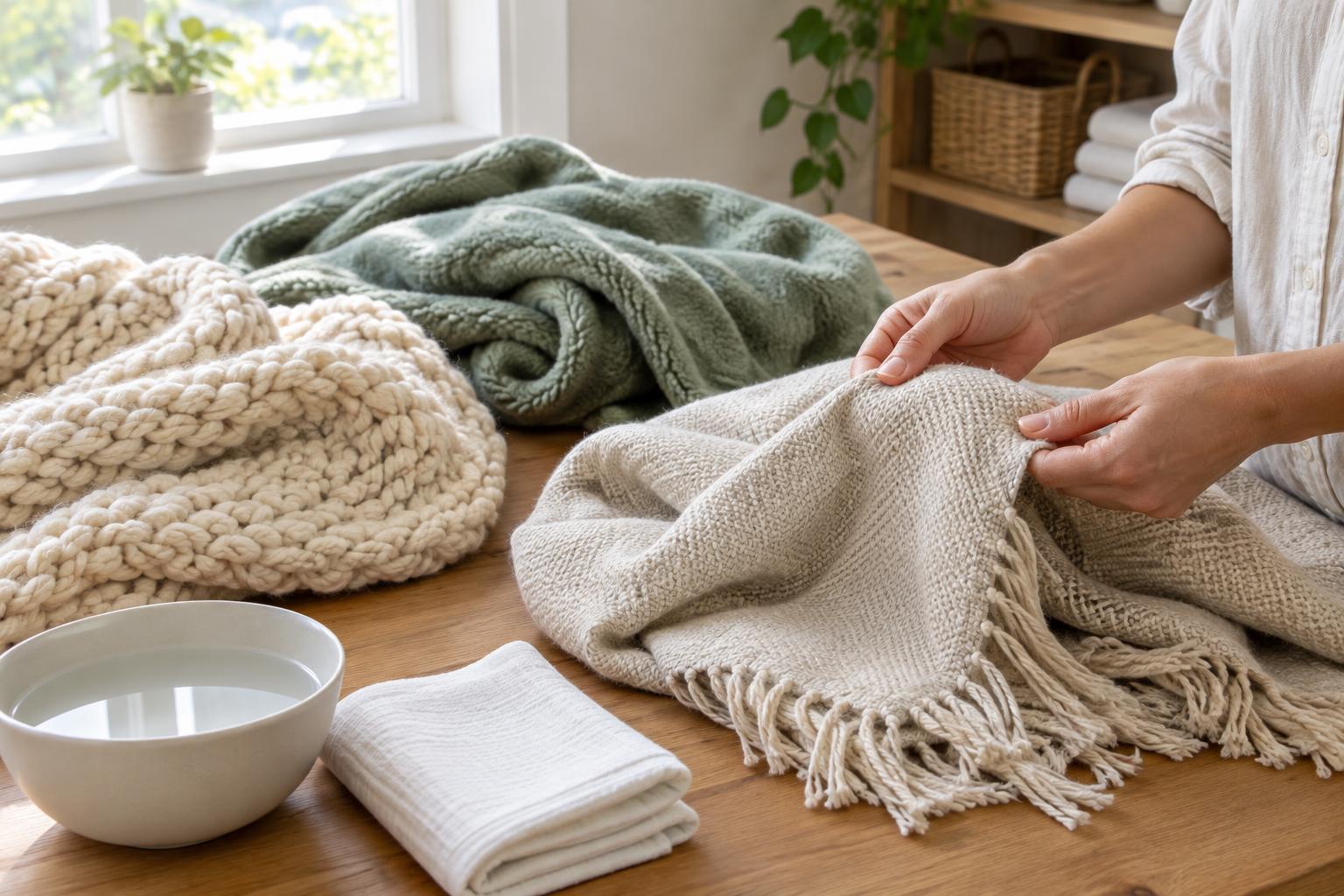
Next, look at how the throw is made. A tightly woven blanket may tolerate movement better than a loose knit with large loops. Fringe, tassels, embroidery, backing, and decorative stitching can snag or distort even when the main fabric is washable. If the blanket is simply dusty or has a small mark, airing or spot-cleaning may be preferable to washing the whole piece.
Choose a method that suits the fiber
Cotton and linen throws are often washable, but they can shrink or wrinkle, particularly in warm water or a hot dryer. If the label permits machine washing, use a gentle cycle, cool water, and a modest amount of mild detergent. Wash dark or strongly colored pieces separately at first if you are unsure whether the dye will run. Smooth the blanket into shape before drying.
Wool needs a gentler approach because heat and agitation can cause it to felt or shrink. Follow a wool-specific care label closely; some wool throws should not be machine washed. For a washable wool throw, use cool water, an appropriate gentle detergent, and minimal movement. Avoid wringing it. Support its weight when lifting it wet, then lay it flat to dry in its intended shape.
Polyester fleece and many other synthetic throws are commonly machine washable, though their trims or coatings may have different needs. Cool or warm water and a gentle cycle are usually safer than high heat. Wash fleece away from lint-shedding towels, and skip excessive detergent, which can be hard to rinse from a thick pile. High dryer heat may flatten or damage some synthetic textures, so check the label before tumble drying.
Let construction guide the wash
Loose knits, open weaves, and throws with long fringe deserve extra protection. If machine washing is allowed, a roomy mesh laundry bag can help limit snagging. Do not pack the washer tightly: a blanket needs space to move and rinse, but a heavy wet throw must also be within the machine’s capacity. When either point is uncertain, hand washing or a larger suitable machine may be the better option.
Quilted and layered throws call for attention to both the outer fabric and what is inside. Check that seams are sound before washing, since a loose seam can open further during a cycle. Faux fur, velvet-like pile, and embellished surfaces can change texture when rubbed or heated. For these, follow the label and test any proposed spot treatment where it will not show.
Treat small marks before they spread
For a fresh spill, lift off any solids and blot liquid with a clean, absorbent cloth. Work from the outside of the mark toward the center rather than scrubbing it across the blanket. Test a small amount of mild cleaning solution on a hidden area before treating the visible spot. Use as little moisture as the job requires, especially on wool, layered throws, or fabrics that show water marks.
Rinse or blot away cleaning residue according to the fabric’s care instructions. A pale ring can form if one patch is saturated while the surrounding fabric stays dry, so work carefully and avoid repeated soaking. If a stain persists on a delicate or valuable throw, further home treatment may do more harm than leaving it alone.
Dry thoroughly, then store loosely
Drying is part of cleaning, not an afterthought. Wet blankets are heavy and can stretch if hung from one narrow edge. Lay delicate knits and wool flat on a clean, dry surface, turning them when needed so both sides can dry. For machine-dryable throws, choose the temperature permitted by the label and check the blanket before it becomes overdry. Keep it out of storage until the center and any thick seams feel fully dry.
Between washes, shake out crumbs, air the throw, and address spills promptly. Once clean and dry, fold it without compressing it tightly and store it where air can circulate. This lighter routine helps keep a throw comfortable while reducing unnecessary full washes.