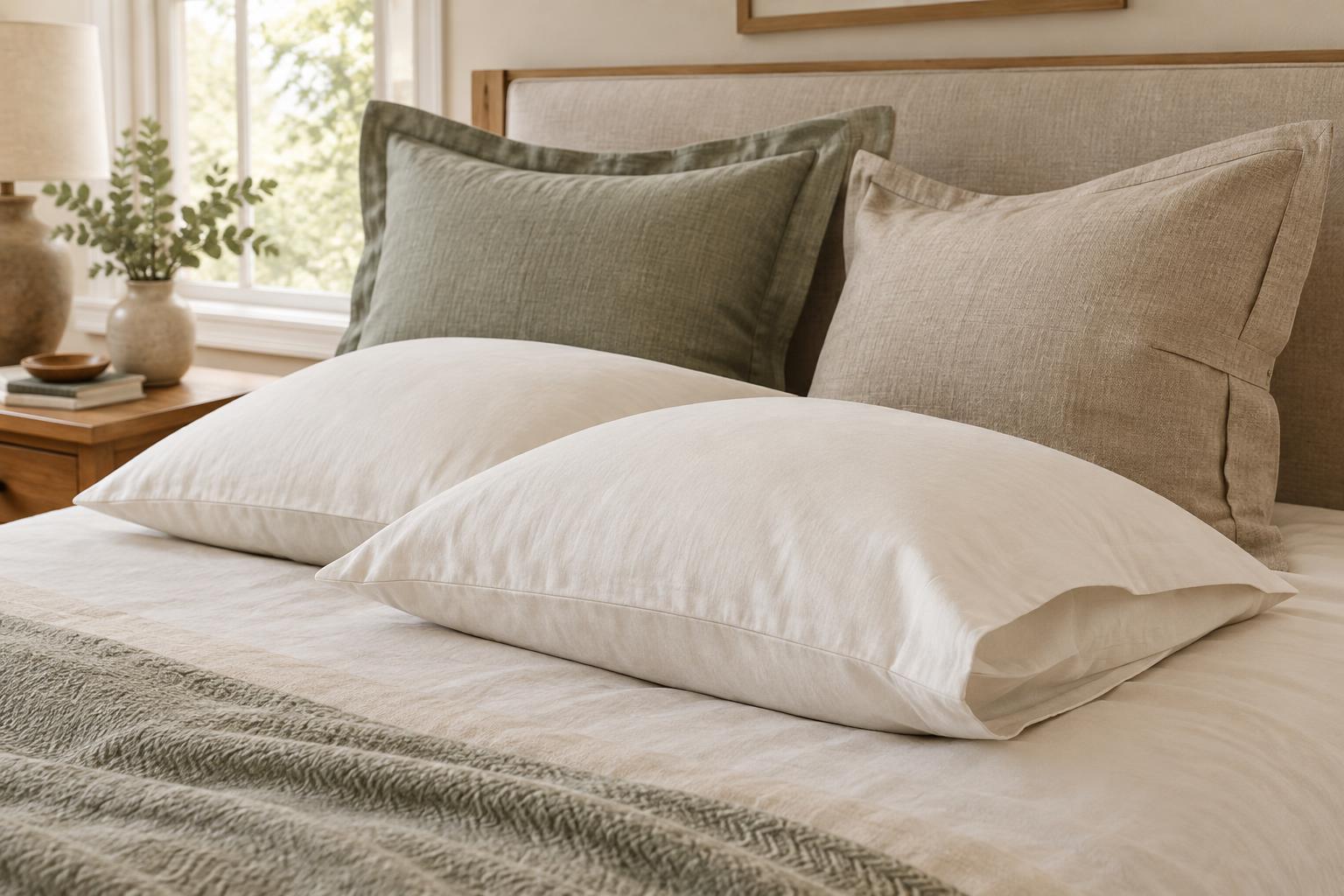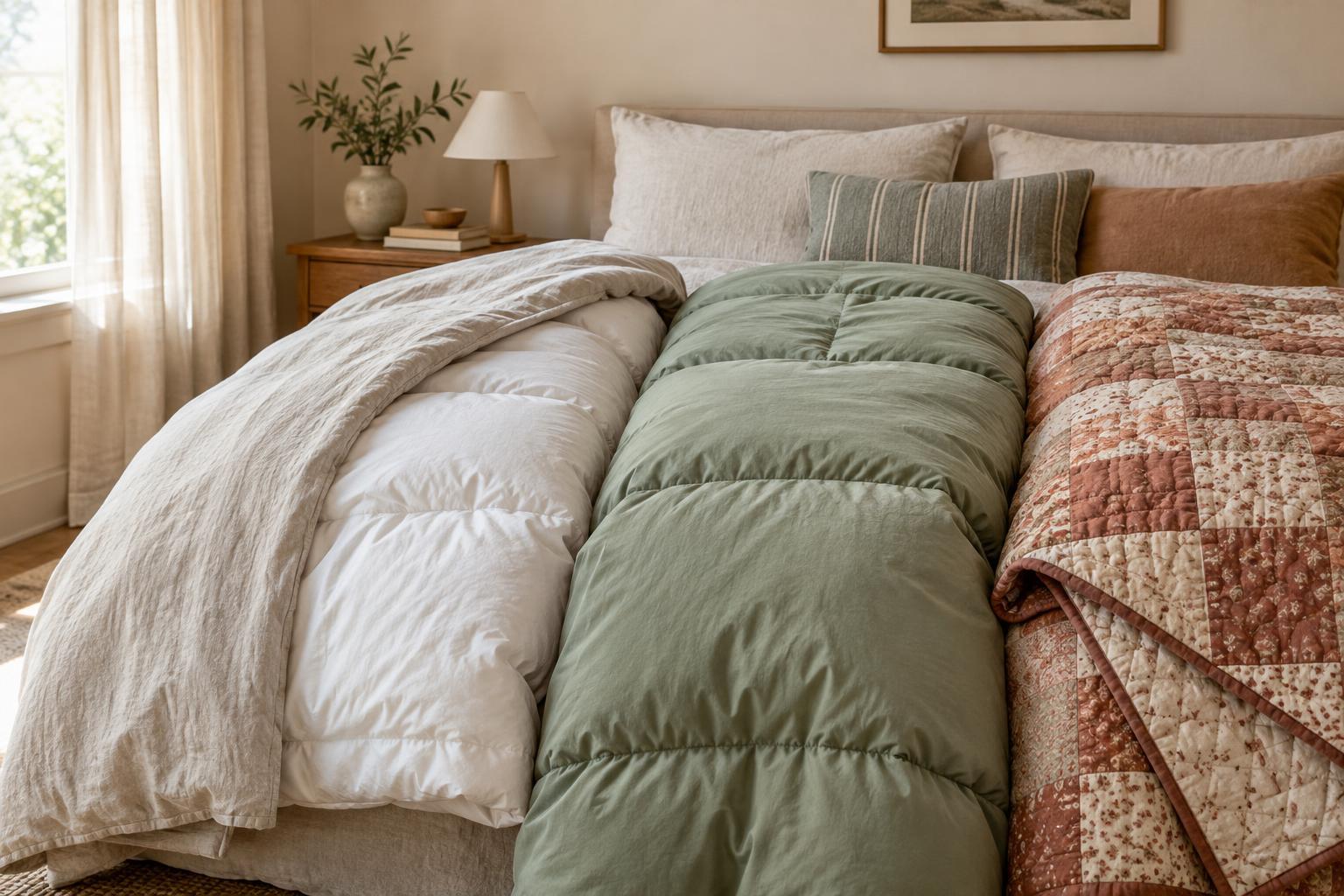
Start with the space people need
The best pillow arrangement leaves the sofa ready for someone to sit down. Before choosing colors or patterns, look at how the sofa is used. Does one person like to stretch out? Do guests need room to sit side by side? Are the arms comfortable on their own, or does a pillow make them easier to lean against? Those answers matter more than a fixed rule about how many pillows a sofa should hold.
Begin with fewer pillows than you think you need. Place one at each end, sit down, and notice whether they support your back or get in the way. Add another only if it improves comfort or the look of the sofa. A small sofa may need just two, while a long sofa can hold a few more without feeling crowded. The useful test is whether people can sit down without first moving a pile.
Build a simple arrangement
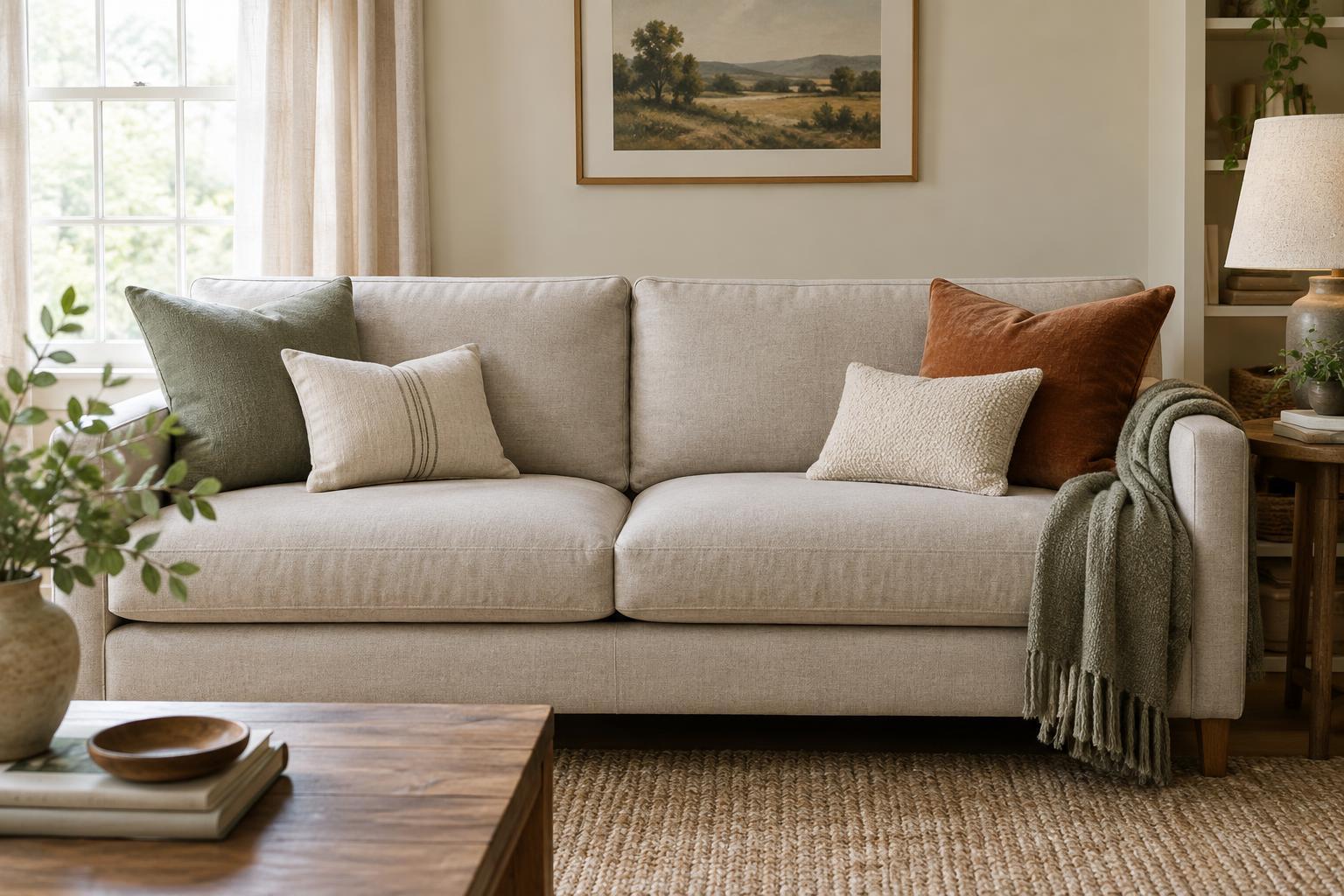
For an easy starting point, put a larger pillow near each arm. These anchor the arrangement and give anyone sitting at the ends something to lean on. If the sofa has room, layer a slightly smaller pillow in front of one or both. Keep the middle relatively open, especially if that is the seat people use most often. An open center makes the sofa look approachable rather than carefully staged.
The arrangement does not have to be symmetrical. Matching groups at both ends can suit a formal room, while an uneven grouping often feels more relaxed. On a sectional, the inside corner may be a natural place for a cluster, but check that pillows there do not spill onto neighboring seats. Try each layout from a seated position as well as from across the room; a pleasing photograph is less useful than a comfortable place to land.
Mix sizes and shapes with restraint
Variation gives a small group of pillows more interest than a large group of near-identical ones. Pair a generous square with a smaller square, lumbar pillow, or round cushion. The larger piece provides support, while the smaller one adds a change of outline. Avoid stacking so many layers that the back of the sofa becomes difficult to reach. Pillow inserts also matter: an overstuffed, rigid pillow can take up more usable space than a softer one of the same dimensions.
Choose sizes in relation to the sofa rather than by a measurement alone. A deep sofa may comfortably hold fuller pillows, while a shallow seat can feel cramped with them. If an existing pillow looks appealing but pushes you forward when you sit, move it to a chair or use a slimmer insert. Comfort is a good reason to edit an arrangement, not a failure of your decorating plan.
Let color and texture do the work
A restrained palette helps a few pillows look intentional. You might repeat a color already present in the curtains, rug, or artwork, then add one contrasting shade. Patterns are easier to combine when they vary in scale: a broad stripe, for example, can sit beside a small print and a solid fabric. Leave some visual quiet so the sofa upholstery remains part of the composition.
Texture adds warmth without demanding more pillows. A smooth cotton cover beside a nubby weave or soft velvet can create depth even when the colors are similar. Think about upkeep before choosing delicate finishes: removable covers are convenient where pillows see frequent use, and some textured fabrics can catch on jewelry or pets’ claws. Follow each cover’s care label rather than assuming all decorative fabrics can be washed the same way.
Make the arrangement easy to live with
A sofa changes throughout the day, and its pillows can, too. Keep a nearby basket or spare chair available if someone wants to clear a seat. If pillows regularly end up on the floor, treat that as useful feedback: reduce the number or swap bulky ones for flatter, more supportive options. The goal is a room that welcomes use, not an arrangement everyone hesitates to disturb.
Give the pillows a quick reset when tidying the room: straighten covers, return each one to its usual spot, and fluff inserts that need it. Occasionally check seams, zippers, and inserts for wear. A small, comfortable collection that is easy to maintain will often do more for a sofa than an elaborate display. Leave enough space for people, and the finishing touches can stay just that: finishing touches.