Comfort starts with how you sit
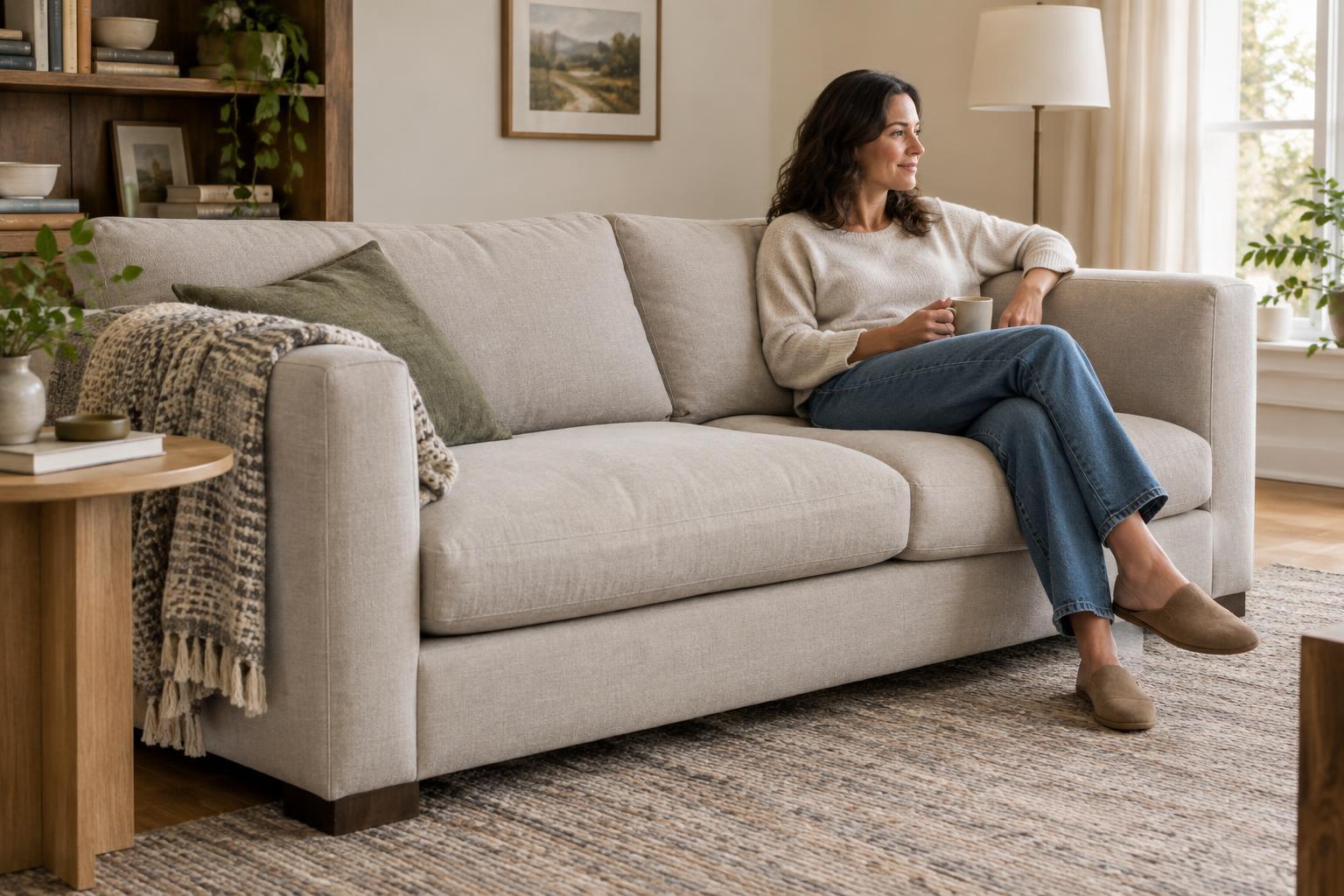
Sofa comfort is not determined by softness alone. The distance from the front edge of the seat to the back cushions, the height of the seat above the floor and the angle of the backrest all influence where your weight rests. A sofa that suits relaxed lounging may feel less natural for upright conversation, while a tidy, upright design may not offer much room to curl up.
Your proportions and habits matter as much as the sofa’s dimensions. Consider who uses it most often, whether they prefer to sit with their feet on the floor, and whether the sofa is mainly for reading, watching films or hosting guests. These questions give measurements a purpose: they help you judge a sofa in the context of everyday use rather than by appearance alone.
Seat depth: room to lounge or support to sit upright
Seat depth is the usable space between the front of the seat and the surface supporting your back. A deeper seat leaves more room to tuck up your legs or change position. If you like to sit upright with your back against the cushions, though, a deep seat may leave your feet dangling or prompt you to perch near the front edge. A shallower seat can make upright sitting feel more straightforward, but may offer less space for lounging.
Check usable depth rather than relying only on a product’s overall dimensions. Thick or loose back cushions take up space, and their shape can shift as you lean into them. A removable lumbar cushion can shorten the effective depth when you want support and be moved aside when you want to stretch out. If several people with different preferences share a sofa, that flexibility may be more useful than choosing the deepest seat available.
Seat height: the link between feet, knees and standing up
Seat height is usually considered from the floor to the top of the seat cushion, but the number does not tell the whole story. A soft cushion compresses when someone sits on it, lowering the seated position. A firmer cushion may retain more of its stated height. This is why two sofas with similar listed measurements can feel noticeably different.
To assess height, sit back in your usual position and notice whether your feet rest comfortably on the floor. Check whether your thighs feel supported without the front edge pressing uncomfortably behind your knees. Then stand up without using an exaggerated push or rocking motion. A low, yielding seat may be pleasant for lounging yet less convenient for frequent sitting and standing; a high seat may make it harder for some people to settle with their feet grounded. Trying both movements is more revealing than testing the first few seconds of sitting.
Back angle: upright, reclined and everything between
The back angle describes how far the backrest leans away from an upright seat. A more upright back can suit conversation, reading or working briefly with a notebook. A more reclined back often encourages a relaxed posture, especially when paired with a deep seat. Neither angle is universally better: the useful question is whether you can rest against the back without feeling pushed forward or needing to hold yourself in place.
Pay attention to the back cushions as well as the frame. Plump cushions may make a sofa feel more upright than its frame suggests, while flattened cushions can change where your lower and upper back make contact. If you plan to read on the sofa, test it in a reading position; if you tend to nap, try leaning back and shifting to one side. Arm height and cushion shape can also affect whether those positions feel easy.
Test the whole sofa, not one measurement
These three dimensions interact. A deep seat paired with a reclined back encourages lounging, but may feel especially far from upright. A higher seat can help keep feet grounded on a deep sofa for some people, yet feel awkward for others. Cushion firmness, upholstery fabric and the amount of give in the seat add another layer: a smooth, firm seat holds its shape differently from a plush one that lets you sink in.
When comparing sofas, sit for more than a moment. Try your usual positions, place your feet on the floor, lean fully against the back and stand up again. If you are shopping with someone who will share the sofa, have them repeat the same checks. For a sofa already at home, small changes such as rearranging back cushions or adding a supportive cushion may improve the fit. The aim is not a perfect set of numbers, but a seat that works for the people and routines in your room.