Start with texture, not the fabric name
A sofa’s texture affects more than its appearance. It changes how the seat feels against bare skin, how light moves across the furniture and how easily crumbs or pet hair can be brushed away. Chenille, velvet and canvas offer notably different surfaces, but their names do not tell the whole story. Fiber content, weave or pile construction, backing and finish can all affect how a particular upholstery fabric wears.
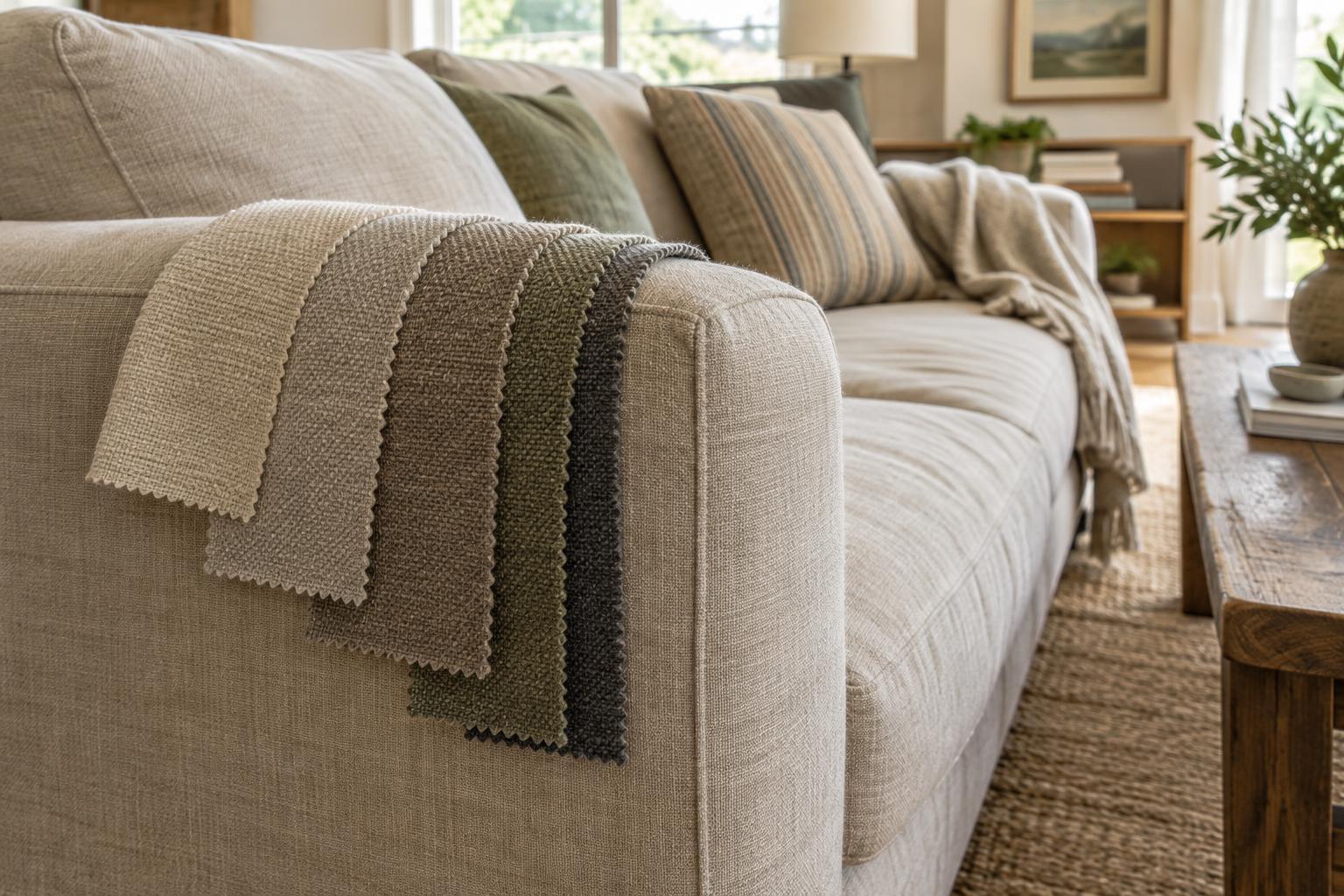
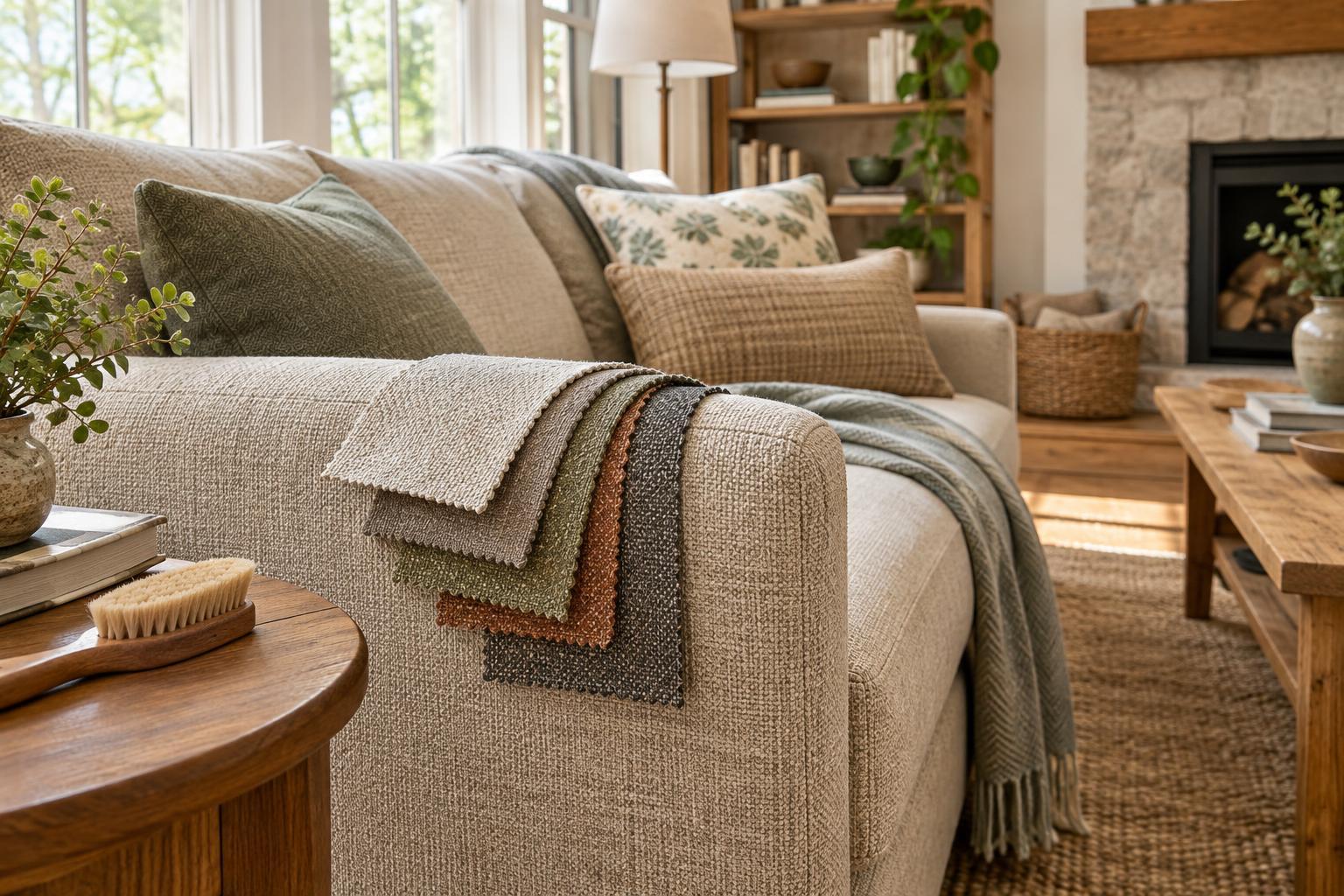
If you are choosing between them, request a sample large enough to handle and view in the room where the furniture will sit. Bend it, rub it gently with your hand and look at it from different angles. A small swatch cannot predict years of use, but it can reveal whether you enjoy the feel and whether the color changes dramatically with the light.
Chenille: soft texture with visible depth
Chenille is known for its fuzzy yarn, which gives upholstery a soft, inviting surface. Depending on how it is woven, it may look smooth from a distance or show a pronounced pattern up close. Its texture can make a large sofa feel warm and relaxed, especially in a room with plain walls and simple furnishings. It is often appealing on seats where comfort matters more than a crisp, tailored outline.
That softness calls for a closer look at construction. Some chenille fabrics can snag on sharp objects, and areas that receive repeated pressure may develop a different surface appearance. Check a sample for loose-looking loops or yarns, particularly if pets use the furniture. For routine upkeep, remove dust and grit with an upholstery attachment using light pressure. Follow the furniture maker’s cleaning instructions rather than assuming that every chenille can be treated the same way.
Velvet: a directional surface that plays with light
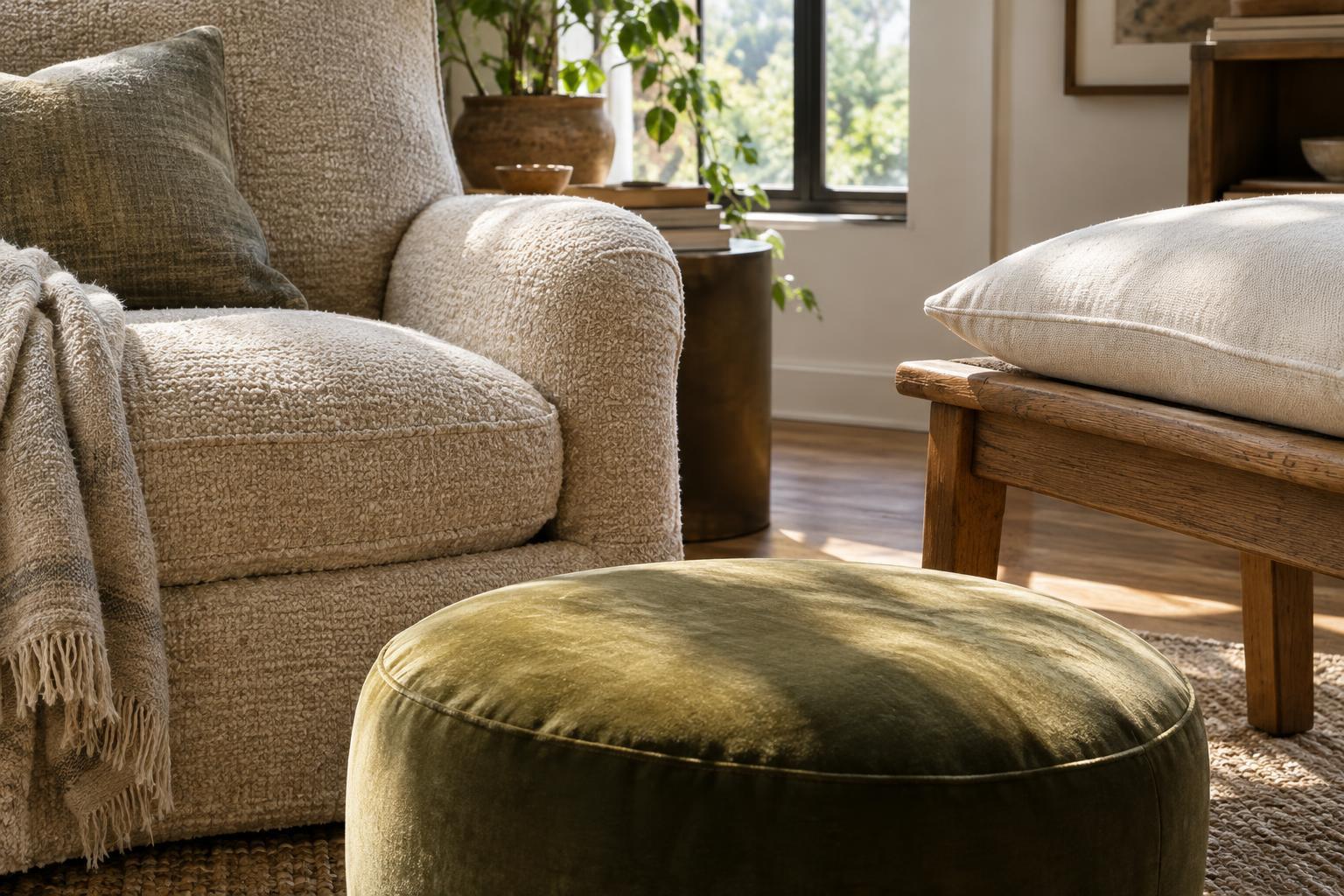
Velvet has a short, dense pile that can look rich and smooth or softly mottled, depending on its fiber and finish. Stroke a sample one way and then the other: the color may appear to shift because the pile lies in a different direction. This effect can add depth to a plain chair or headboard, but it also means cushions may not look perfectly uniform throughout the day.
Pressure marks are a practical consideration. Sitting, leaning or resting objects on velvet can change the direction of the pile, sometimes leaving visible impressions. These marks are not necessarily stains or damage, though they may bother someone who prefers an even surface. Velvet can suit frequently used furniture if the specific product is made for upholstery, but it is worth asking how its pile should be maintained. Avoid aggressive scrubbing, which may disturb the surface.
Canvas: a firm weave with a casual character
Canvas generally describes a sturdy, plain-woven fabric with a relatively flat surface. On furniture, it can bring a clean, informal look that pairs well with wood, leather or patterned cushions. Compared with chenille or velvet, its flatter texture may be simpler to brush free of surface debris. A firm canvas can also help a slipcover or structured piece hold a neat shape.
Canvas is not automatically stain-resistant or easy to wash. A pale color can show marks, while a rougher weave may feel less comfortable against skin than a softer fabric. Its behavior also depends on the fibers and any finish applied to them. If you want removable covers, confirm that the finished covers—not just the fabric—are intended for home washing, and check for shrinkage guidance before laundering.
Match the fabric to the way you live
Think about where the furniture sits and who uses it. A reading chair may benefit from chenille’s softness; a formal accent chair may make the most of velvet’s shifting color; and a family-room ottoman might suit canvas’s straightforward texture. These are starting points, not rules. A tightly constructed chenille, an upholstery-grade velvet and a well-finished canvas may perform quite differently from cheaper or more delicate versions of the same fabrics.
Before ordering, check the fabric’s intended use, fiber content, care label and any information the seller provides about wear and light exposure. Bring swatches home if possible, because a fabric that looks subtle in a showroom may appear much brighter beside your windows. For any of the three, prompt attention to spills, regular gentle vacuuming and care that follows the label will do more good than relying on the fabric name alone.