Start with how the furniture is used
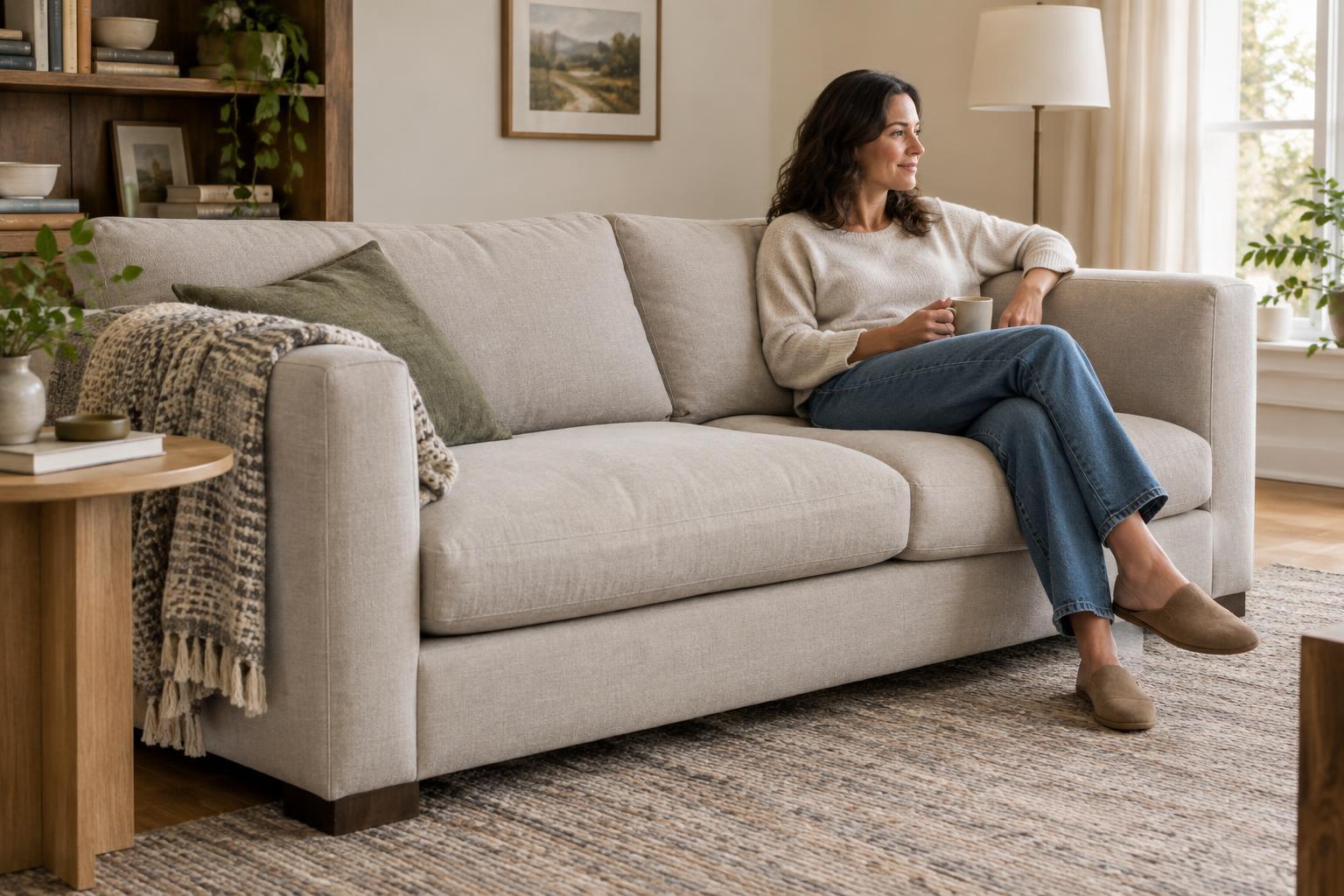
A sofa that hosts meals, pets and afternoon naps needs a different covering from an occasional chair. Before comparing swatches, note who uses the piece, how often it is used and what tends to land on it. Crumbs, muddy paws, spilled drinks and friction from repeated sitting create different challenges. Also consider whether the furniture sits in direct sunlight, where some colors and fibers may fade over time.
Decide which compromises you can live with. A pale, softly textured fabric may make a room feel calm but show dark marks readily. A firm, tightly woven cloth may be easier to brush clean but feel less cozy against bare skin. Choosing for your actual routines, rather than an idealized room, makes it more likely that you will enjoy the furniture without constantly worrying about it.
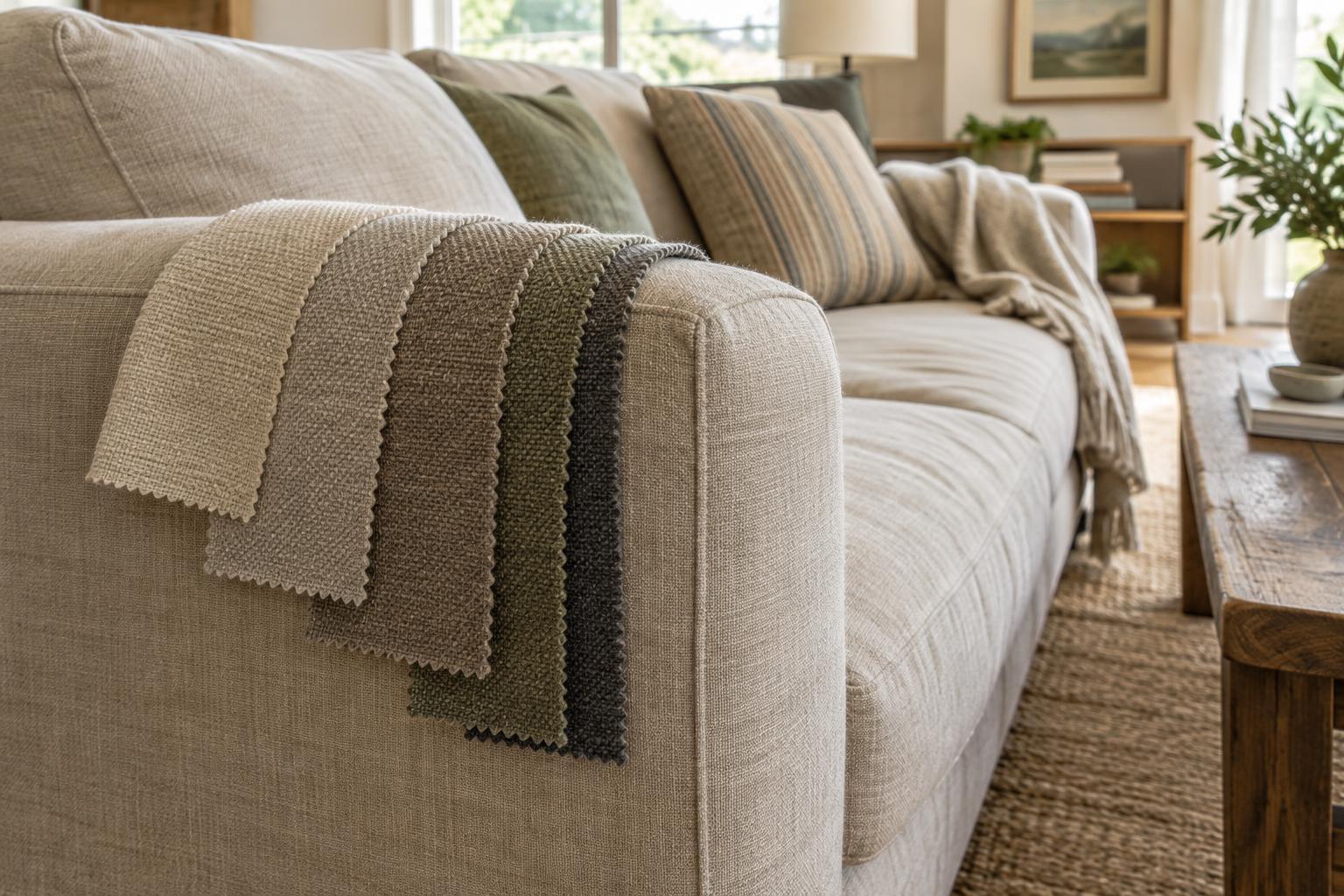
Look closely at weave and texture
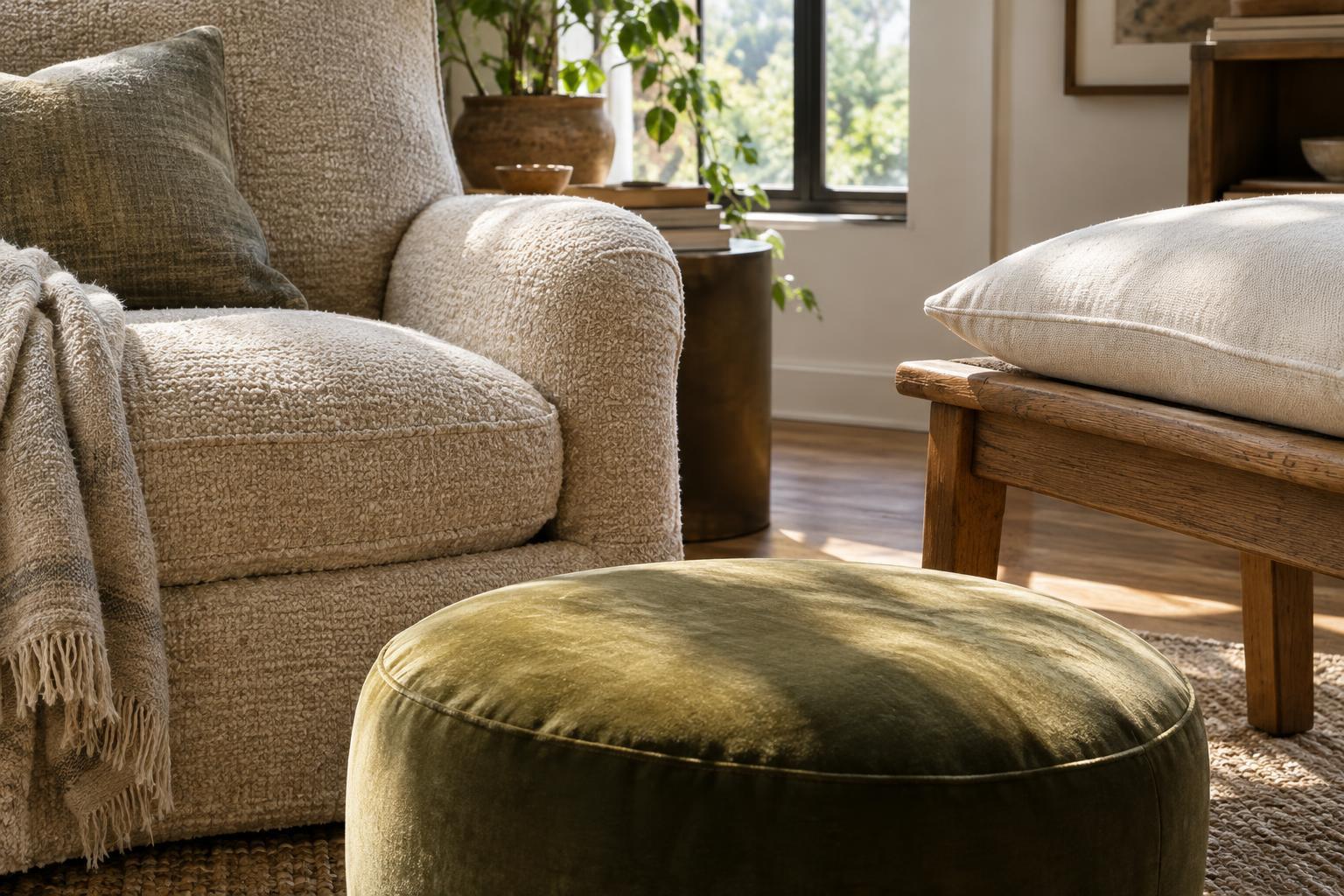
For heavily used seating, examine how the fabric is constructed as well as how it looks. A close, even weave often resists snagging better than an open or loosely looped surface. Raised loops can catch on claws, jewelry or fasteners. Very long, soft piles may develop visible changes where people sit most often. None of these details automatically rules out a fabric, but they affect how gracefully it may wear in your home.
Run a hand across a sample in several directions, then bend it and look between the threads. Does the surface feel stable, or does it shift easily? If you have pets, gently catch a fingernail on the sample to see whether threads pull up. Try to view a larger sample if possible: a tiny swatch can hide a strong pattern, a pronounced nap or a texture that feels different across a whole cushion.
Compare fibers without expecting a perfect one
Fiber content can help narrow the choice, but construction and finish matter too. Cotton can feel breathable and familiar, though some cotton fabrics crease or absorb spills readily. Linen has a relaxed texture but commonly shows wrinkles. Wool can offer resilience and warmth, while some people find it too textured for lounging. Synthetic fibers such as polyester are often chosen for their durability and ease of care, but their feel and appearance vary widely.
Blends may balance qualities that a single fiber cannot. Rather than choosing by fiber name alone, ask for the upholstery specifications and care information for the exact fabric. A supplier’s abrasion rating can be useful for comparing options, but it does not guarantee resistance to stains, snags, fading or every kind of wear. If anyone in the household is sensitive to a particular texture, test the sample against skin before committing.
Choose a color that works between cleanings
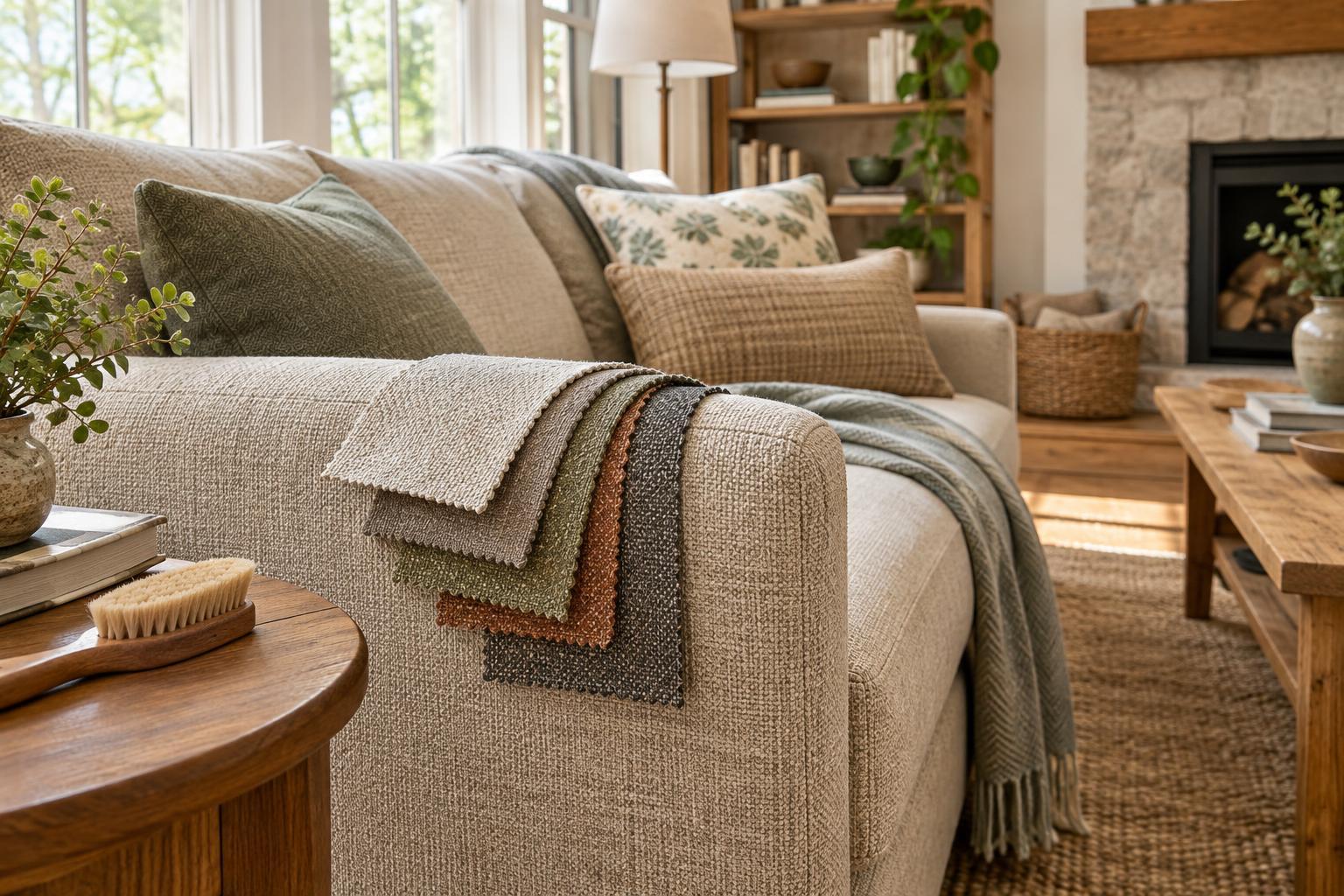
Mid-tones and mixed-color weaves can make everyday lint, crumbs and minor marks less obvious than a flat, very light or very dark surface. A small-scale pattern can provide similar visual forgiveness. That does not mean choosing a busy print you dislike: a subtle change in thread color may be enough. Consider the colors of pet hair, blankets and clothing that regularly touch the furniture, not just the paint on the walls.
View samples in the room at different times of day. Daylight and lamps can make the same fabric look warmer, cooler, lighter or duller. Set the swatches beside flooring, curtains and other textiles, then leave them there for a few days. This gives you time to see whether the color still appeals when the room is in ordinary use, rather than only when it has been tidied for a decision.
Check the care plan before you buy
Ask how the fabric should be cleaned and whether cushion covers are removable. Removable does not always mean machine washable: washing can shrink or change some upholstery fabrics, making covers difficult to put back on. Follow the care guidance for both the fabric and the furniture. For routine upkeep, gentle vacuuming with an upholstery attachment and prompt attention to spills are generally more useful than waiting for dirt to become noticeable.
If a fabric is described as stain-resistant or easy-care, find out what that means for the specific product. Finishes can differ, and no surface is immune to every spill. Keep a sample after purchase if you can; it offers a place to test a permitted cleaning method before treating a visible area. The right choice is a fabric whose look, feel and upkeep all suit the life happening around it.