Start with the window’s job
Curtain length is more than a finishing detail. It affects how much glass you can uncover, whether you can reach a window handle, and how easily you can clean around the fabric. Before choosing a style, notice what happens at the window throughout the day. Do you need privacy while keeping daylight? Do you want to darken a bedroom? Is there a desk, sink or radiator beneath the sill? The answers will narrow the choice more reliably than a rule about what looks best.
Look at the whole wall, too. A window in an open stretch of wall can accommodate fabric that drops to the floor. A window above a worktop or bench usually calls for a shorter treatment. If you hope to use the curtains for warmth or light control, consider the fabric, lining and coverage as well as the length: a long curtain that leaves gaps at the sides may not do the job you expect.
Floor-length curtains: softness and full coverage
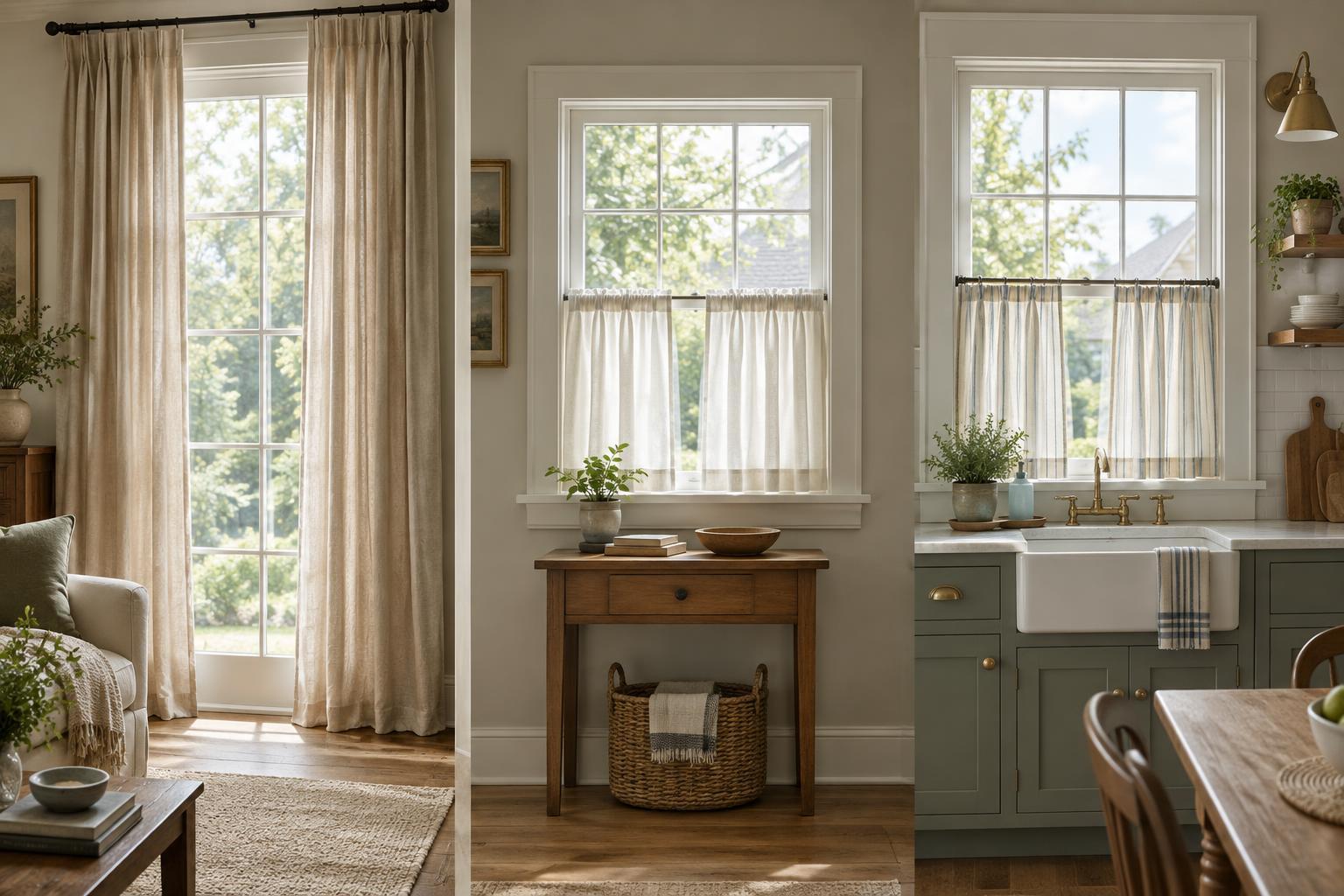
Floor-length curtains draw the eye down and give a window a generous, finished look. They suit living rooms, bedrooms and other spaces where the wall below the window is clear. Because they cover the full opening when closed, they are a useful starting point when privacy or reduced light is important. Their effect still depends on the weave and weight of the fabric; a sheer panel will behave differently from a lined, closely woven curtain.
Decide how the hem should meet the floor before measuring. A hem that stops just above it is easier to keep out of dust and less likely to catch under a chair or door. Fabric that rests on the floor can look relaxed, but it needs more frequent attention and may be awkward in busy rooms. Check for vents, heaters, baseboard obstructions and furniture before committing to a long drop. Where fabric would block a heat source or sit against a damp surface, a shorter style may be more practical.
Sill-length curtains: clear space below
Sill-length curtains end around the window sill rather than continuing down the wall. They can be a sensible choice above a desk, a window seat or furniture that cannot easily move. They also keep fabric away from the floor, making sweeping or vacuuming simpler. In a compact room, that visible wall space can help the window treatment feel less dominant.
The exact stopping point matters. A hem that lands awkwardly on a projecting sill may bunch or wear where it rubs; one that ends a little above it may look neater and be easier to operate. Test how the window opens, especially if it tilts inward or has a handle near the curtain. Short panels can still offer substantial privacy when closed, but check the view from outside at night with the room lights on if privacy is a priority. If you want less light around the edges, pay attention to the width and placement of the panels, not just their drop.
Café curtains: privacy without covering the whole window
Café curtains cover the lower portion of a window, leaving the upper glass exposed. They work well where you want to soften a view from the street while keeping daylight and sky visible. That makes them worth considering for kitchens, breakfast areas and rooms where full-length curtains would interfere with a counter or sink. A simple panel on a rod is also relatively easy to remove for washing, provided the fabric itself is washable.
Their limitation is built into the design: the uncovered upper glass still admits views and light. In a bedroom or a ground-floor room that needs complete privacy, café curtains alone may not be enough. You can pair them with another window covering if different times of day call for different levels of coverage. When choosing where the top edge sits, stand in the places you normally use the room and check which sightlines it blocks. A position that works while seated may offer less privacy while standing.
Measure, mock up and choose for daily use
Once you have a likely style, measure the width of the area you want to cover and the drop from the planned rod position to the intended hem. Measure in more than one place, since sills and floors are not always perfectly level. Follow the measurement guidance for your chosen curtain heading or hardware: panels need enough width to hang with some fullness when closed. If you are sewing, allow for hems and any expected fabric shrinkage after laundering.
Before buying fabric, try a simple mock-up. Hold a sheet or paper at the proposed hemline, then view the window from across the room and from outside where appropriate. Open the window, move nearby furniture and imagine cleaning the area. The best length is the one that looks comfortable while letting the room work: floor-length for an unobstructed, fully dressed window; sill-length where the space below matters; or café curtains where daylight and lower-level privacy should share the window.