Start with what the window needs to do
A window treatment can soften a room, frame a view or give you more control over light and privacy. Before choosing a style, notice how the room is used throughout the day. Do you want daylight while sitting near the window? Do you need privacy after dark? Is there space beside the frame for fabric to gather? The answers matter more than a rule about which treatment belongs in which room.
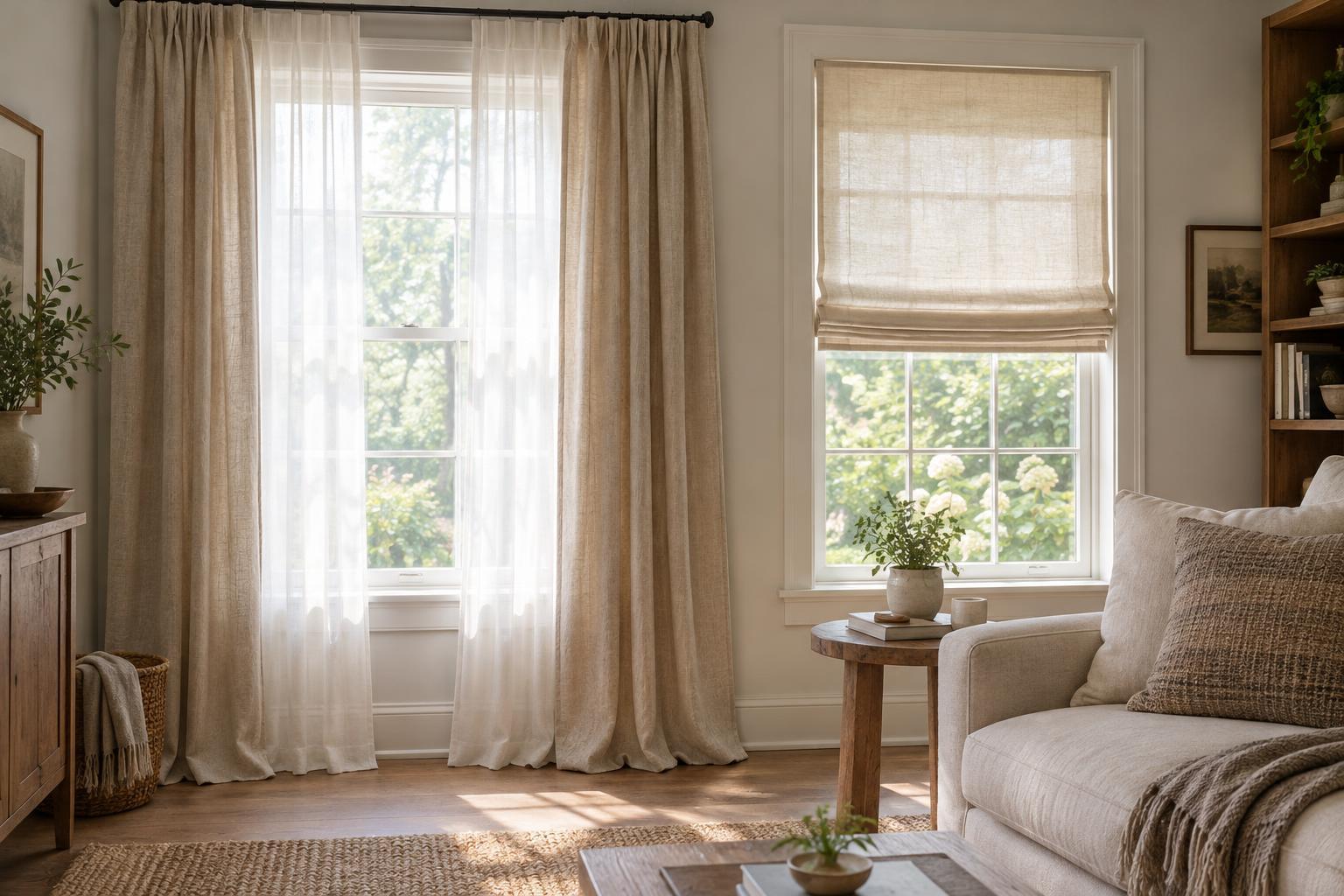
Curtain panels hang in vertical lengths, sheers are lightweight coverings that let much of the daylight through, and Roman shades fold upward in horizontal sections. Each creates a different outline around the window. Panels draw the eye upward and outward, sheers soften what is seen through the glass, and Roman shades keep the area beside the window relatively clear.
Curtain panels add softness and scale
Panels are a useful choice when you want fabric to play a visible part in the room. Hung above the window, they can make the opening feel taller; extending the rod beyond the frame gives open panels a place to rest without covering as much glass. Full-length panels add a continuous line from top to bottom, while shorter panels may suit a window above a radiator, desk or other obstacle.
Fabric changes the effect. A relaxed linen-like weave tends to look softer and more casual, while a smooth, structured cloth makes folds appear neater. Color and pattern also take up more visual space on a long panel than on a compact shade. Hold a sample near the window if possible: fabric can look different when daylight passes through it.
Panels need room to move and somewhere to gather when open. If privacy or light blocking is important, consider the fabric and any lining rather than assuming all panels will perform alike. They are also worth checking for care requirements before purchase, especially if they will brush the floor or sit near a busy doorway.
Sheers filter the view; Roman shades keep a tidy profile
Sheers are well suited to rooms where you want daylight with a gentler view through the window. They can reduce the stark contrast of bare glass and make a room feel airy without adding much visual weight. Their privacy is limited, however, and it can change with lighting: a sheer that feels comfortable during the day may reveal more of the room when lights are on at night. For dependable evening privacy, pair sheers with another covering.
Roman shades offer a more contained look. When lowered, the fabric reads as a single surface; when raised, it stacks into folds above the glass. This makes them useful where long panels would interfere with furniture or a walkway. A patterned Roman shade can bring color to a small area without covering an entire wall in fabric.
The tidy appearance comes with a trade-off: a raised shade may still occupy part of the window, and its folds and lifting mechanism need occasional attention. Check how the shade operates and whether the fabric can be cleaned before choosing one for a kitchen or another room where splashes and dust are likely.
Layer for flexibility, then plan the fit
You do not have to choose just one treatment. Sheers under curtain panels let you soften daylight while keeping a more substantial layer available for evening. A Roman shade inside the window frame with panels outside it can offer adjustable coverage and a softer edge. Layering works best when each piece has a job; adding fabric without a purpose can make a small window feel crowded.
Measure the window and the surrounding wall before settling on a look. Note handles, vents, furniture and the direction the window opens. Decide where a panel will hang when open and how far a raised Roman shade may extend over the glass. For any treatment that must cover the opening closely, follow the maker’s measuring guidance rather than relying on the visible glass dimensions alone.
Finally, think about daily upkeep. Choose fabrics and hardware you can access, operate and clean comfortably. A simple treatment that suits the room’s light, layout and routine often feels better than an elaborate one that is awkward to use. The right choice is the one that makes the window work for the people who live with it.