Measuring the window instead of the space curtains need
A window’s glass or frame is a useful reference, but it rarely tells you the full curtain size. Curtains need room to cover the opening when closed and space to gather when open. If you measure only the frame width, the finished treatment may block more daylight than expected or fail to cover the edges comfortably. Decide where the rod or track will sit first, then measure the span you want it to cover.
Look at the wall around the window before choosing that span. A nearby corner, cabinet or light switch may limit how far curtains can extend. Check that open panels will have somewhere to stack without getting in the way. For a pair of windows, measure each one rather than assuming they match. Small differences in trim or available wall space can change the best hardware position.
Confusing rod width with curtain width
The length of the rod or track is not necessarily the total width of fabric you need. Curtains usually have extra fabric so they can hang in folds when closed. The amount of extra width, often called fullness, depends on the fabric, heading style and look you want. A flat panel may seem wide enough on a table but look stretched across a window once hung.
Before buying, check whether a listed width describes one panel or the whole pair. Also check whether it is the flat fabric width or an approximate finished coverage width; product descriptions can use these terms differently. If you are making curtains, account for side hems and any fabric taken up by pleats or gathers. Record the intended covered span and the number of panels separately so you do not mistake one for the other.
Taking the drop from the wrong starting point
Curtain length depends on how the fabric attaches to the hardware. A curtain with rings may begin below the rod, while a rod-pocket curtain sits differently. Tracks, hooks and adjustable heading tapes introduce their own starting points. Measuring from the top of the window frame before choosing a heading style can leave you with a drop that does not match the installed curtain.
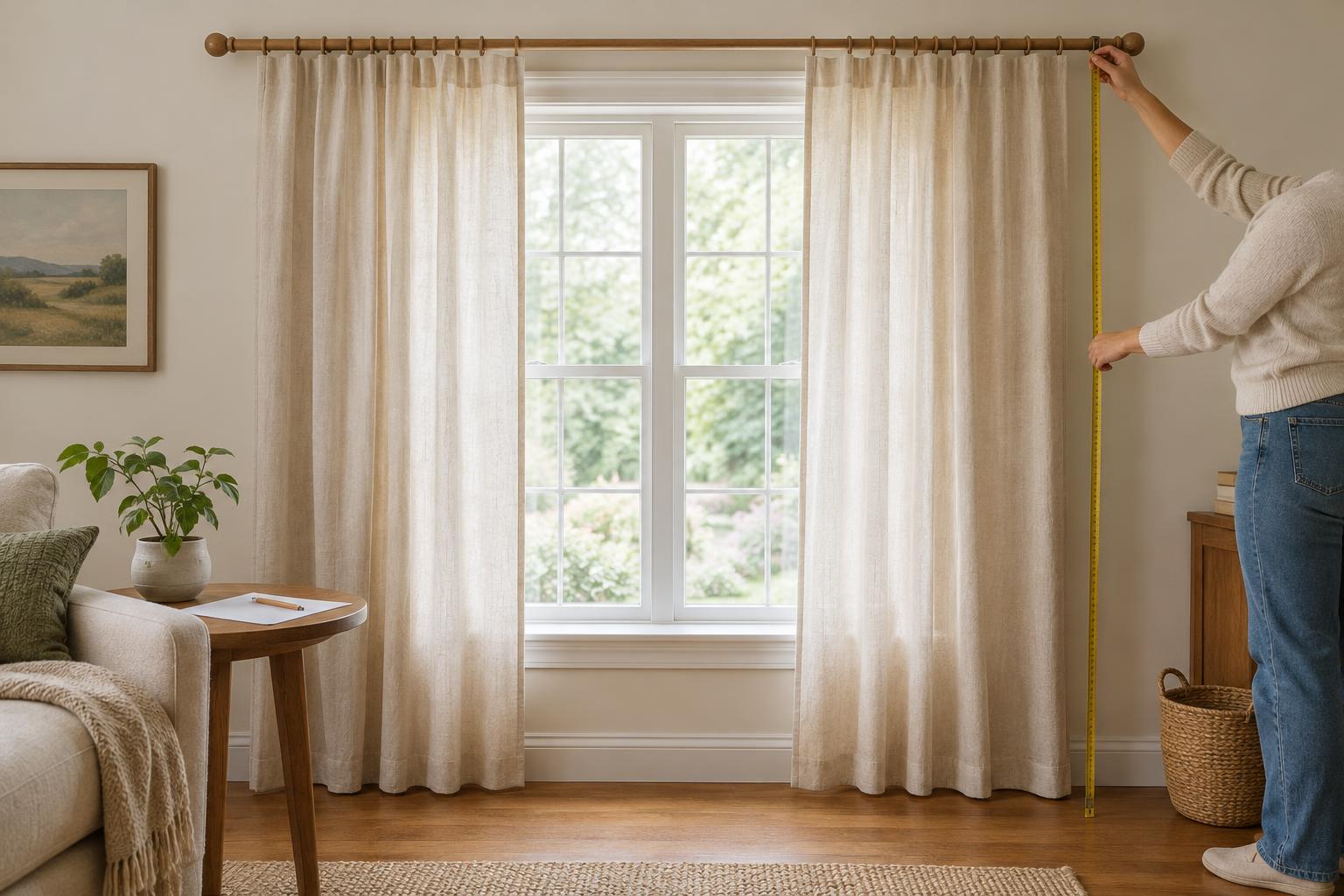
Install the hardware first when possible, or mark its planned position clearly. Then measure from the point specified for your chosen heading to the place where you want the hem to end. That might be just above a sill, below it or near the floor. Check practical clearances, too: a curtain that brushes a radiator, furniture or frequently opened door may need a different endpoint.
Assuming floors and window openings are perfectly level
A single drop measurement can hide variations across a wide window. Floors, ceilings and frames are not always perfectly level, especially in older rooms. Measure the intended drop at the left, centre and right, then compare the results. If the curtain will sit close to the floor, even a modest difference may be noticeable.
Choose the hem position with those differences in mind rather than automatically using the shortest or longest figure. A curtain held slightly above the floor can be more forgiving than one intended to skim it exactly. If you prefer fabric to rest on the floor, allow for the resulting contact when choosing a fabric and planning cleaning. For made-to-measure curtains, tell the maker where you measured from and which finished appearance you want.
Ordering before checking the whole plan
Measurements are easier to mix up when several windows are involved. Make a quick sketch for each opening and label the planned rod or track span, mounting height and desired hem position. Note obstacles such as handles, deep sills and furniture. Write down whether each width refers to a single panel, a pair or the full hardware span. Use the same unit throughout, and measure twice with a firm tape held straight.
Finally, read the sizing guidance for the specific curtain or heading you intend to use. Ready-made panels may be sold in set lengths, while made-to-measure options may ask for a particular kind of width and drop measurement. If the instructions do not match the figures on your sketch, pause and work out the difference before ordering or cutting fabric. A few minutes spent defining each measurement can prevent a much harder alteration later.