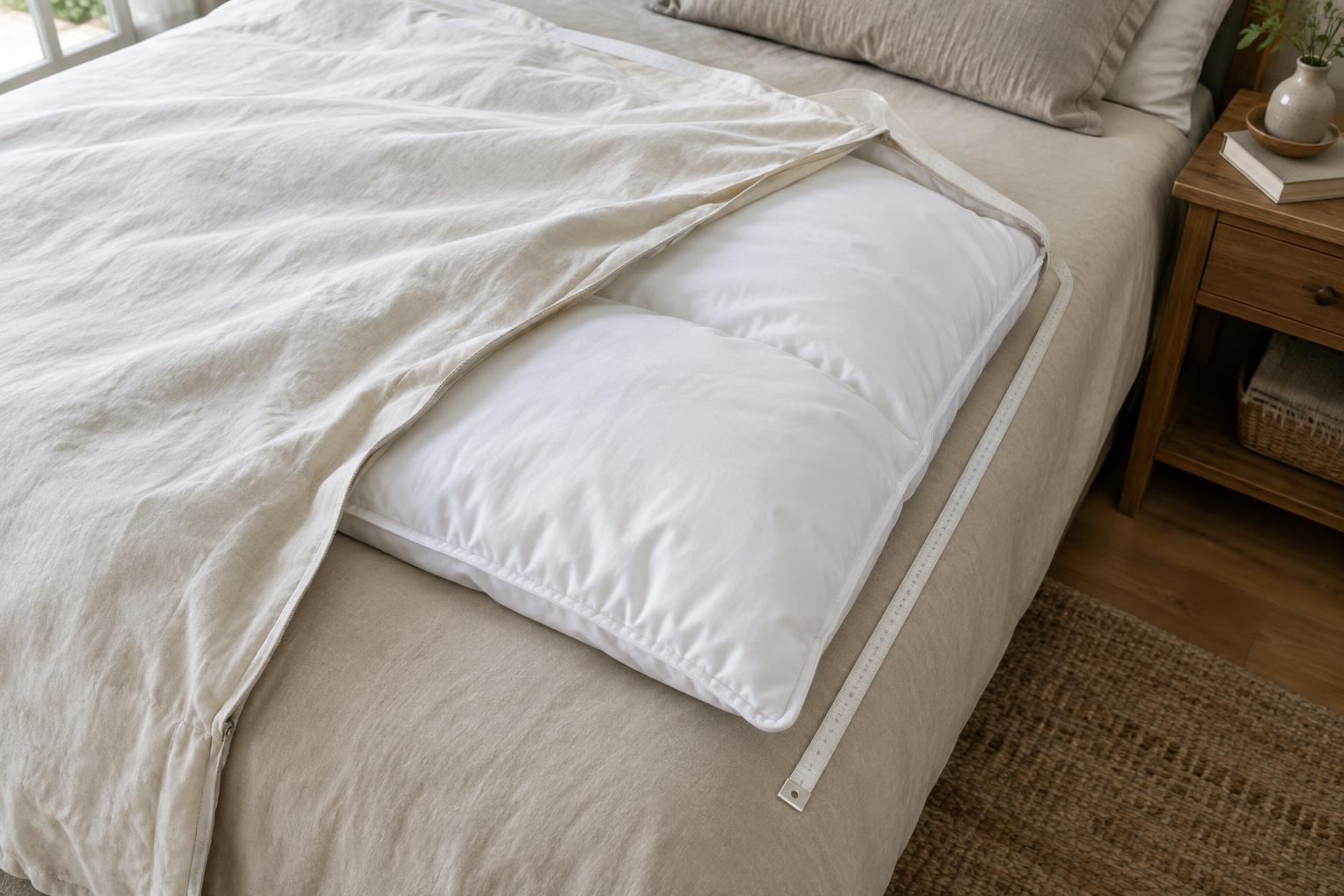
Start with what the cushion needs to do
A cushion insert does more than fill a cover. It determines whether the cushion stands upright, folds into a relaxed shape or offers steady support when someone leans against it. Before choosing a fill, decide where the cushion will live. A decorative cushion on a bed may need to look full and inviting; one used every evening on a sofa also needs to feel comfortable and recover from regular handling.
Think about the cover as well. A structured, tightly woven cover can make a soft insert look neater, while a loose or textured fabric may show the insert’s shape more clearly. If the cover is removable, check its measurements and care label before buying anything to go inside it. The best fill is one that works with both the cover and the cushion’s everyday purpose.
Feather: pliable and easy to arrange
Feather inserts suit cushions that you want to plump, press and reshape. They compress when leaned on and can give a sofa or bed a relaxed appearance. Depending on the insert’s construction, a feather-filled cushion may also hold a crease at the top after you arrange it. Fill blends vary, so two inserts labeled “feather” may feel quite different: one might be soft and yielding, while another feels comparatively firm.
The trade-off is upkeep. Feather inserts generally benefit from regular fluffing and turning to redistribute the fill, and they may flatten during use before being plumped again. A closely woven inner casing helps contain the feathers, though an occasional quill can still be noticeable. If you are sensitive to feather products, prefer to avoid animal-derived materials or want a cushion that asks for less reshaping, another fill may be more suitable.
Down alternative: soft without animal-derived fill
Down-alternative inserts typically use synthetic fibers to create a soft, lofty feel. They can be a useful choice when you like a yielding cushion but do not want feather or down inside it. Some feel airy and compress readily; others are packed more firmly. The label alone cannot tell you exactly how supportive an insert will be, so squeeze and release a sample if you can, or look for a description of its firmness and construction.
These inserts still need occasional plumping, and their fibers can shift or compact with use. Care instructions vary: a washable cover does not necessarily mean the insert itself can go in a machine. If easy cleaning is a priority, check the insert’s care label before purchase rather than assuming all synthetic fills can be washed in the same way.
Foam: a defined shape and steadier support
Foam inserts are worth considering when you want a cushion to keep a more consistent outline or provide firmer back support. A single foam piece tends to give a smoother, more structured result than a loose fill. Shredded foam behaves differently: it can be more flexible and adjustable, although the pieces may settle unevenly. Foam density, thickness and any surrounding fiber wrap all affect how the finished cushion feels.
Foam is less suited to a soft, folded look. It usually will not drape or hold a crease like a pliable feather insert. Measure carefully, especially for a tailored cover: foam that is too large can strain seams, while a piece that is too small can leave slack fabric at the corners. For a more rounded appearance, a thin wrap of batting can soften the foam’s edges if there is room inside the cover.
Check the fit, then plan for everyday care
Compare the cover’s finished dimensions with the insert’s stated dimensions, not just the size printed on a product name. A soft, loose-fill insert is sometimes chosen slightly larger than its cover to give the corners a full appearance, but the right fit depends on how firmly the insert is packed and how much the cover fabric can accommodate. Avoid forcing an overfilled insert into delicate fabric or a zipper under tension.
Whatever fill you choose, put the insert into a clean, dry cover and follow the separate care labels for both pieces. Rotate cushions that receive frequent use, fluff loose fills when they start to look uneven, and let any cleaned insert dry thoroughly before covering it again. For a mixed arrangement, there is no need to use one fill throughout the room: a structured foam cushion can provide support, while softer inserts nearby add a more relaxed look.