Think of a sofa as a layered structure
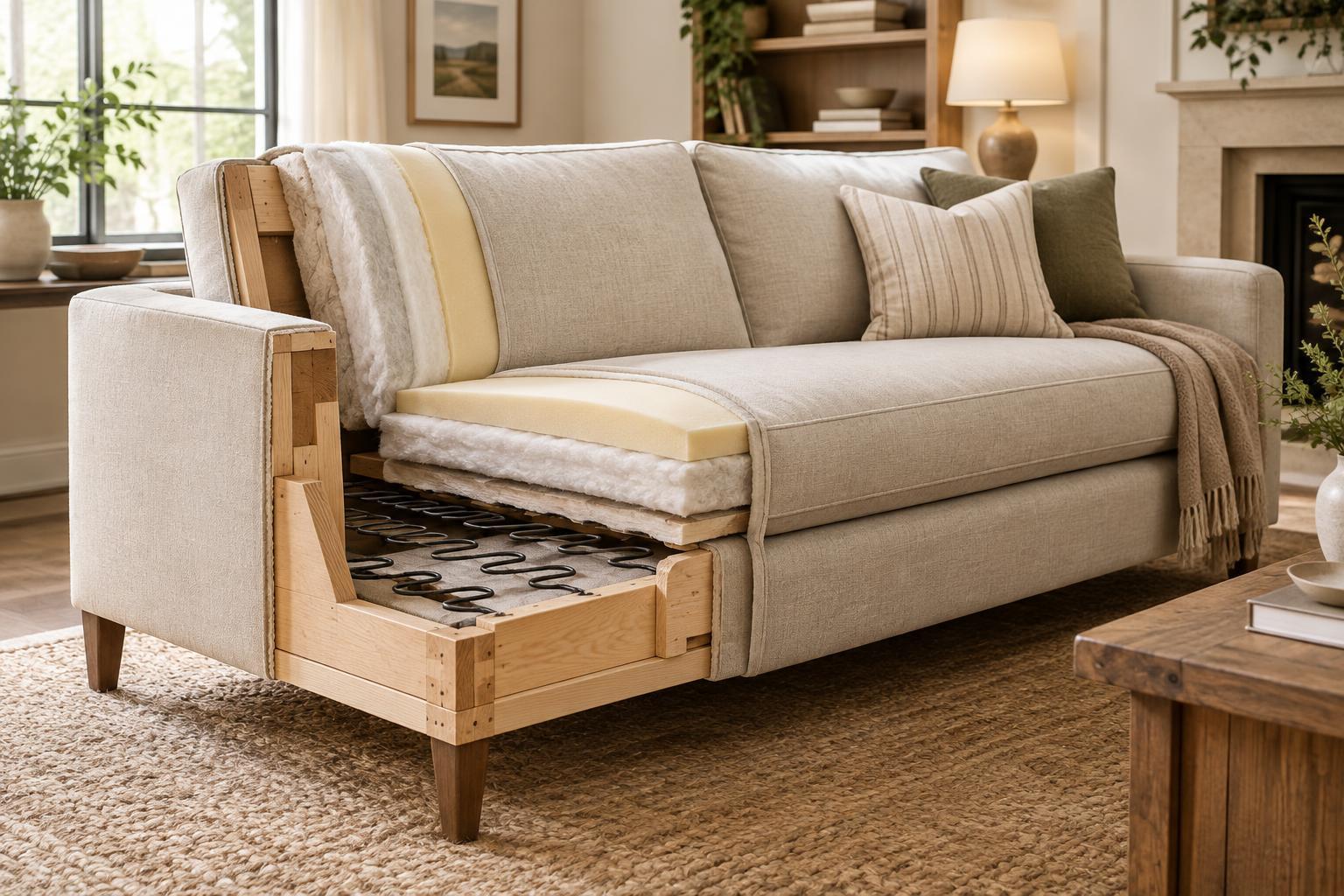
A sofa may look like one piece of furniture, but its feel comes from several parts doing different jobs. The frame gives it shape, the support system carries weight across the seat and back, padding softens those structures, and the cover is the surface you see and touch. Cushions add another layer: they may be removable or built into the sofa, and their filling affects comfort independently of the structure beneath them.
These distinctions are useful when choosing a sofa or deciding whether to refresh one. A sagging seat does not always mean the frame is damaged; cushion filling may simply have flattened. Equally, a new cover will change the appearance of a sofa without correcting a weak support system. Looking at each layer in turn makes it easier to ask useful questions and avoid judging the whole piece by its fabric alone.
The frame: shape and stability
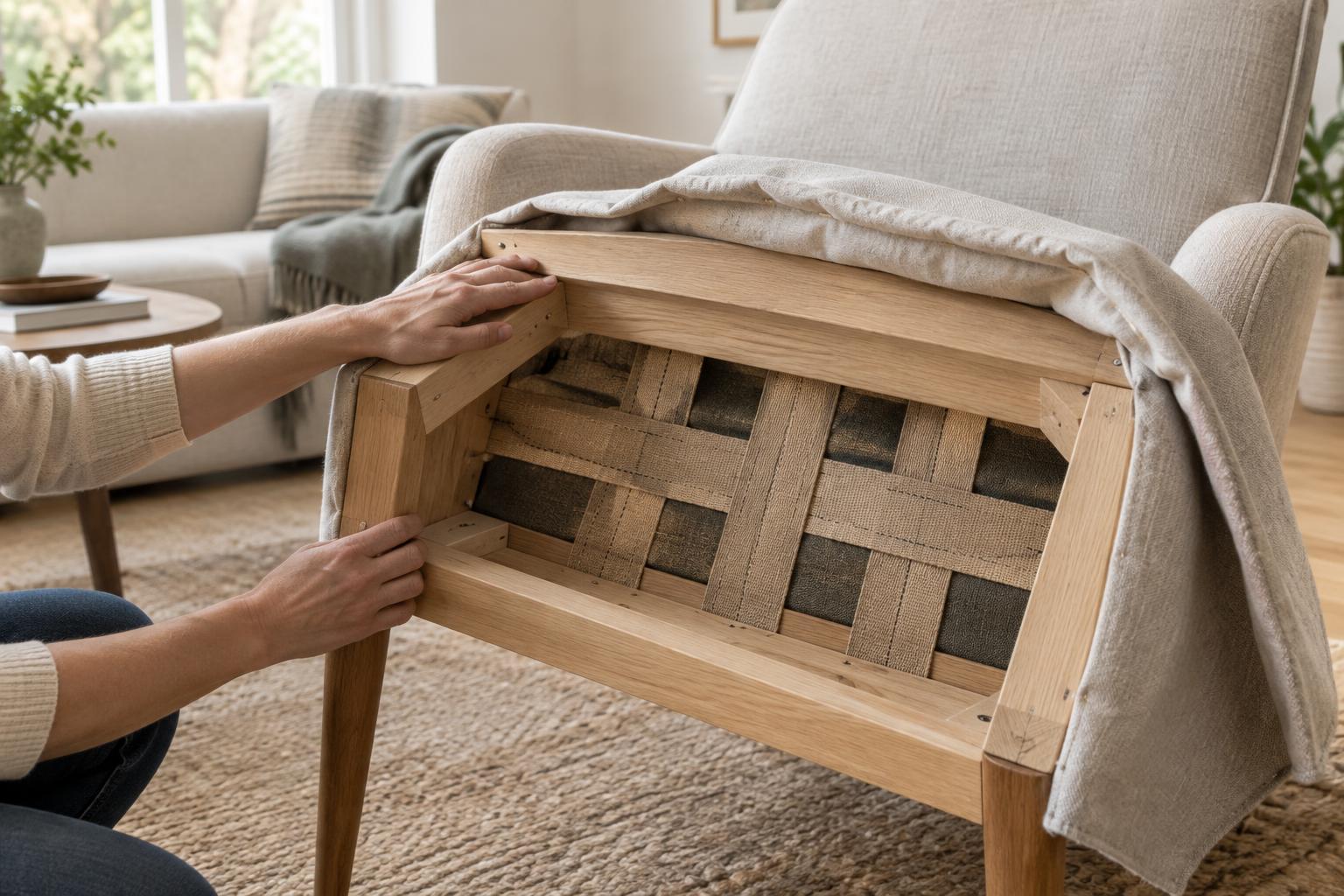
The frame forms the sofa’s underlying outline, including its arms, back and base. Frames can use wood, metal, engineered wood or a combination of materials. Material names alone do not tell the full story: the way parts are joined and braced also affects how solid a sofa feels. A frame should hold its shape when you sit down, stand up or shift your weight.
To assess a sofa, look for uneven arms, a base that twists when gently moved, or persistent creaks coming from the structure. On a used sofa, check accessible areas underneath for loose joints or visible damage. A creak does not automatically identify a broken frame, but movement in the structure is worth investigating before spending money on new upholstery. Some frame repairs are possible; their practicality depends on where the damage is and how easily the area can be reached.
The support system: what sits beneath the cushions
Seat cushions usually rest on a support system attached to the frame. Depending on the sofa, this may include springs, webbing or a platform-style base. Its job is to spread weight and provide controlled give. The back may use a different arrangement because it supports a different kind of pressure.
When assessing support, sit in several places rather than testing only the centre. Notice whether one position drops much farther than the others, whether you can feel hard structural edges, or whether the seat rebounds after you stand. A low-feeling seat could reflect worn support, tired cushions or both. If cushions are removable, lifting them can help you separate what is happening underneath from how the cushions themselves feel. Avoid assuming that a firmer seat is always better: the goal is even, comfortable support for the people who use it.
Padding and cushions: the comfort layers
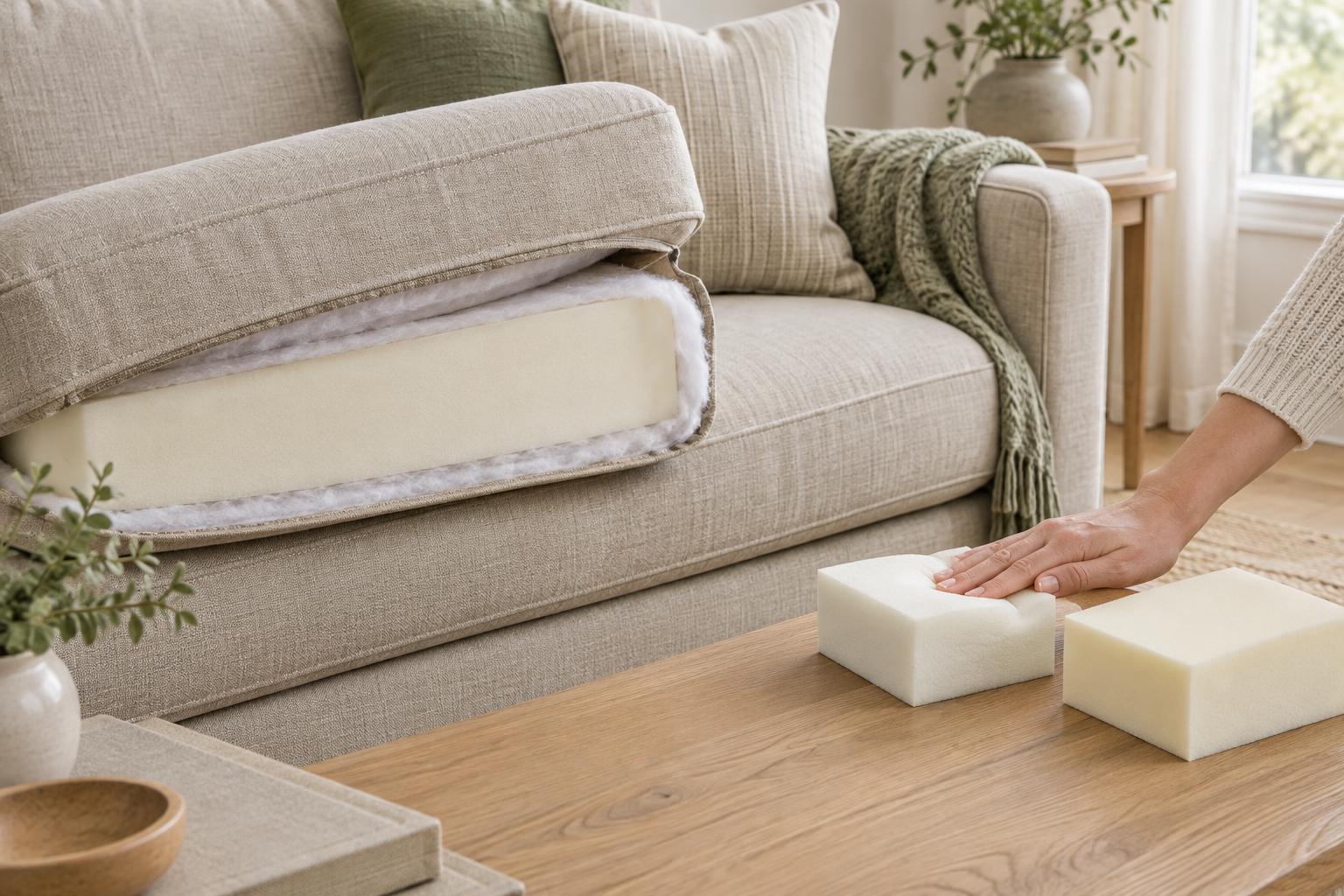
Padding sits between the structural parts and the cover, smoothing corners and giving arms, backs and seats their finished contours. Seat and back cushions may contain foam, fibre, feathers or layered combinations. Each filling has a different feel and upkeep routine. Soft, loose fillings may need regular plumping to keep their shape, while a firm foam cushion may require less reshaping but can still soften or compress with use.
Pay attention to whether discomfort is local or widespread. If one removable cushion looks thinner than its neighbours, the cushion may be the first place to investigate. If every cushion tilts toward the same side, look more closely at the structure beneath. Cushion inserts can sometimes be replaced without changing the sofa’s cover, but dimensions and fit matter: an insert that is too large can strain seams, while one that is too small may leave the fabric looking slack.
The cover: appearance, touch and everyday care
The outer cover takes daily contact, so its texture and construction matter as much as its colour. Fabric upholstery varies in weave, surface feel and resistance to snagging or visible marks. Leather and coated materials have different care needs from woven textiles. Removable covers may make some maintenance easier, but a removable cover is not necessarily machine washable; check its care label before cleaning. Fixed covers call for particular care around seams, piping and areas where moisture could reach the padding.
Before buying or refreshing a sofa, consider how it will be used. A room with frequent lounging, pets or food calls for a surface you can maintain realistically, not just one that looks appealing in a sample. Ask what can be cleaned, rotated or replaced, and examine stitching and closures as well as the main fabric. When wear appears, start with the layer responsible: cleaning addresses surface soil, new filling may restore cushion shape, and re-covering changes the finish. Understanding the layers helps you choose a proportionate fix.