Why the heading matters
A curtain heading is the finished top edge that connects the fabric to a rod or track. It helps determine the shape of the folds, how easily the curtain opens and closes, and where the fabric sits in relation to the window. Two panels made from the same material can look quite different when one has crisp pleats and the other hangs from relaxed tabs.
Before choosing a heading, think about how you use the window. Curtains opened every morning need to move comfortably along their hardware. Panels that mainly frame a window can favour appearance over easy movement. Check the width of the opening, the space beside it for gathered fabric, and any radiator, handle or furniture that could interfere with the curtains.
Eyelets: regular folds on a visible rod
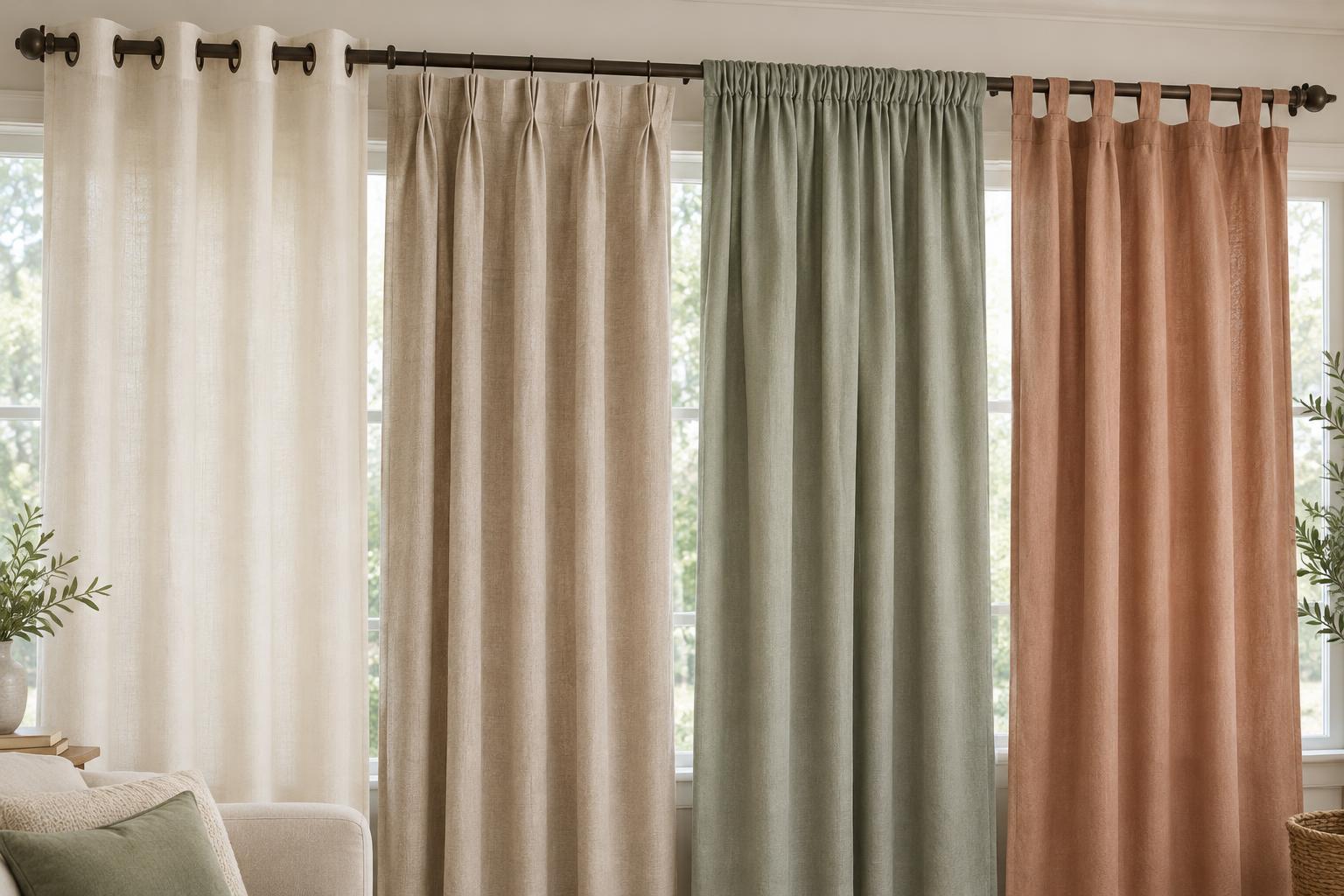
Eyelet curtains have reinforced rings set into the top of the fabric. The rod passes through the rings, creating broad, fairly even folds. Because the rod remains visible between folds, its colour and finish become part of the room’s design. Eyelets often suit a straightforward, contemporary look, though the fabric itself can make the result feel formal or casual.
This heading works with a compatible rod rather than a standard curtain track. Before buying, check that the eyelets fit over the rod and can pass any joins or brackets they will need to cross. Eyelet panels are often convenient for curtains opened daily, but their movement depends on the rod and ring fit. Allow room at the ends of the rod for the folds to stack when the curtains are open.
Pleats: a tailored top with flexible hardware
Pleated headings gather fabric into stitched groups at the top, producing a more structured shape. Pinch pleats are one familiar example; other pleated styles create different spacing and fullness. Pleats can give patterned or plain fabric a deliberate, finished appearance, especially when the curtain is long enough for the folds to fall freely.
Pleated curtains usually hang from hooks attached to rings on a rod or gliders in a track, depending on how they are made. That makes the choice of hooks and hardware important. Some arrangements let you adjust the hanging height slightly, but not every pleated curtain offers that option. If you are ordering or making panels, confirm the intended track or rod, finished width and hook placement before deciding on the drop.
Rod pockets: a simple, gathered finish
A rod pocket is a fabric channel sewn along the curtain’s top edge. The rod slides through it, bunching the material into soft gathers. It is a simple finish that works well for smaller windows, lightweight panels and curtains that spend most of their time in one position. A ruffle above the pocket is possible if the channel is sewn below the top edge.
Fabric gripping the rod can make a rod-pocket curtain less convenient to draw across a wide window. A heavier fabric or a tightly filled pocket may increase that resistance. Check the pocket size against the rod, and consider how you will remove the panel for washing. If frequent opening is a priority, rings, gliders or eyelets may be easier to live with.
Tabs: an informal way to show the fabric
Tab-top curtains hang from fabric loops sewn along the upper edge. The exposed loops give the top of the panel a relaxed, handmade character and leave the rod visible. Their spacing also shapes the folds below. Tabs can be especially appealing where the curtain fabric and rod are both meant to be seen.
Like rod pockets, tabs slide directly on the rod and may not move as smoothly as curtains suspended from rings or gliders. Make sure the loops are large enough for the chosen rod without being so long that the panel hangs lower than planned. Tab tops are often best for panels that are adjusted only occasionally, although a smooth rod and lightweight fabric can make them easier to handle.
Choose for the window, then check the details
Start with the hardware you have or want to install. A track points toward a compatible hooked heading, while a decorative rod gives you options such as eyelets, pockets and tabs. Next, consider the fabric: a soft material may form relaxed gathers, while a firmer one may hold more defined folds. Lining and fabric weight can change the finished hang, so test a sample if you are uncertain.
Finally, measure from the point where the chosen heading will hang, not simply from the top of the rod or track. Check the finished panel width as well as the window width; fabric needs enough width to form the folds you want when closed. Whichever heading you choose, a little planning around movement, clearance and care will make the curtains more pleasant to use.