Decide whether hand-washing is safe
Before filling a basin, look for a care label. “Dry clean only” or “do not wash” is a reason not to try a home soak. If the label is missing, consider both the fiber and the way the item is made. Beading, glued trims, stiff linings, pleats and mixed materials may react differently to water. A cushion cover might be washable while its insert is not; a curtain may become too heavy to handle safely once wet.
For an uncertain item, test an inconspicuous spot with a damp white cloth and a little of the detergent you plan to use. Check for color transfer, a change in texture or a visible ring after it dries. A successful spot test reduces uncertainty but cannot guarantee that an entire piece will wash evenly. If the item is valuable, fragile or difficult to replace, it is reasonable to stop rather than risk washing it.
Set up a gentle wash
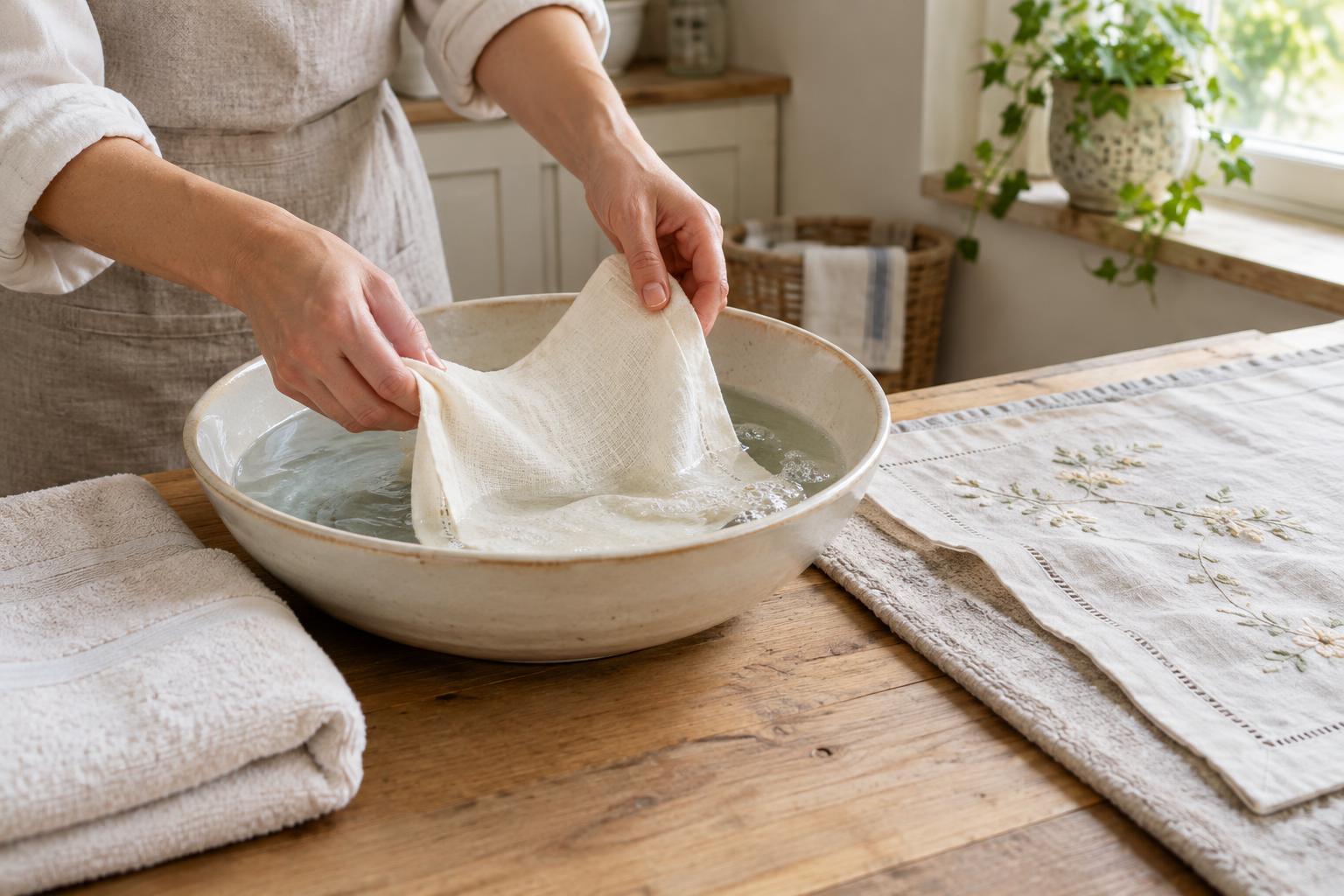
Choose a clean basin or sink large enough for the textile to move without being crammed in. Use cool water unless the care label specifies otherwise, and add a small amount of mild liquid detergent suitable for the fabric. Too much detergent takes extra rinsing, which means extra handling. Remove loose dust first by shaking the item gently or using a soft brush where appropriate; trapped grit can rub against fibers during washing.
Wash one piece at a time, especially if colors differ. Lower the textile into the water and support its weight with both hands. Press it lightly to move water through the fabric rather than scrubbing or twisting. Give more attention to areas that see frequent contact, but avoid rubbing decorative stitching or raised textures. Keep soaking brief, particularly with fabrics that may bleed, shrink or lose their finish. Follow any more specific timing on the care label.
Handle marks without harsh scrubbing
If you notice a mark, deal with it before washing the whole piece. Blot a fresh spill with a clean, absorbent cloth instead of pushing it deeper into the weave. For an older mark, dampen the area and gently work in a tiny amount of the same mild detergent, then rinse it carefully. Always test this approach in a hidden spot first. Heat and vigorous rubbing can make some marks harder to remove or leave the fabric looking worn.
Not every stain will come out with a gentle wash. Repeatedly treating one spot may create a lighter patch or disturb the texture, especially on velvet, silk-like fabrics or loosely woven cloth. If a mark remains after one careful attempt, let the textile dry and reassess it. Accepting a faint mark can be a better choice than damaging the surrounding fabric.
Rinse and remove water carefully
Drain the wash water while supporting the textile, then refill the basin with cool water. Move the piece gently through the clean water. Repeat as needed until the water is clear and the fabric no longer feels slippery. Avoid holding up a large, wet item by one corner: the weight of the water can pull it out of shape or strain seams.
To remove excess water, press the textile lightly against the side of the basin. Do not wring it. For a small piece, lay it on a clean towel, roll the towel and fabric together, and press the roll gently. Use another dry towel if the first becomes saturated. This step makes drying easier without the twisting that can leave creases or distort delicate fibers.
Dry, inspect and store
Check the label before choosing a drying method. Many delicate textiles do best laid flat on a dry towel, with edges eased back into their original shape. Keep the piece away from direct heat and strong sunlight, which can affect some colors and fibers. If the label permits line drying, distribute the weight evenly rather than clipping a heavy wet section at two narrow points. Turn or replace the towel beneath a flat-drying item if it stays damp.
Wait until the textile is fully dry before folding it, putting it back on a cushion or storing it. Lingering moisture can leave a musty smell. Once dry, inspect seams, hems and trims so you can address loose threads before the next wash. For routine care, gentle dust removal, prompt blotting of spills and washing only when needed can reduce wear on pieces that are awkward or delicate to launder.