Why cushion seams are worth a closer look
A cushion’s fabric may be the first thing you notice, but its seams help define its shape. They mark the transition between surfaces, create visible lines and determine where the fabric bends around an edge. Two cushions made with the same material can look quite different if one has a crisp, outlined border and the other has a soft, uninterrupted front.
Seam details also affect everyday upkeep. A raised trim can collect lint along its edge, while a recessed seam may be harder to reach with a vacuum attachment. Neither detail is inherently better. The useful question is whether the construction suits the cushion’s shape, the fabric and the amount of tidying you are willing to do.
Boxed edges, knife edges and rounded fronts
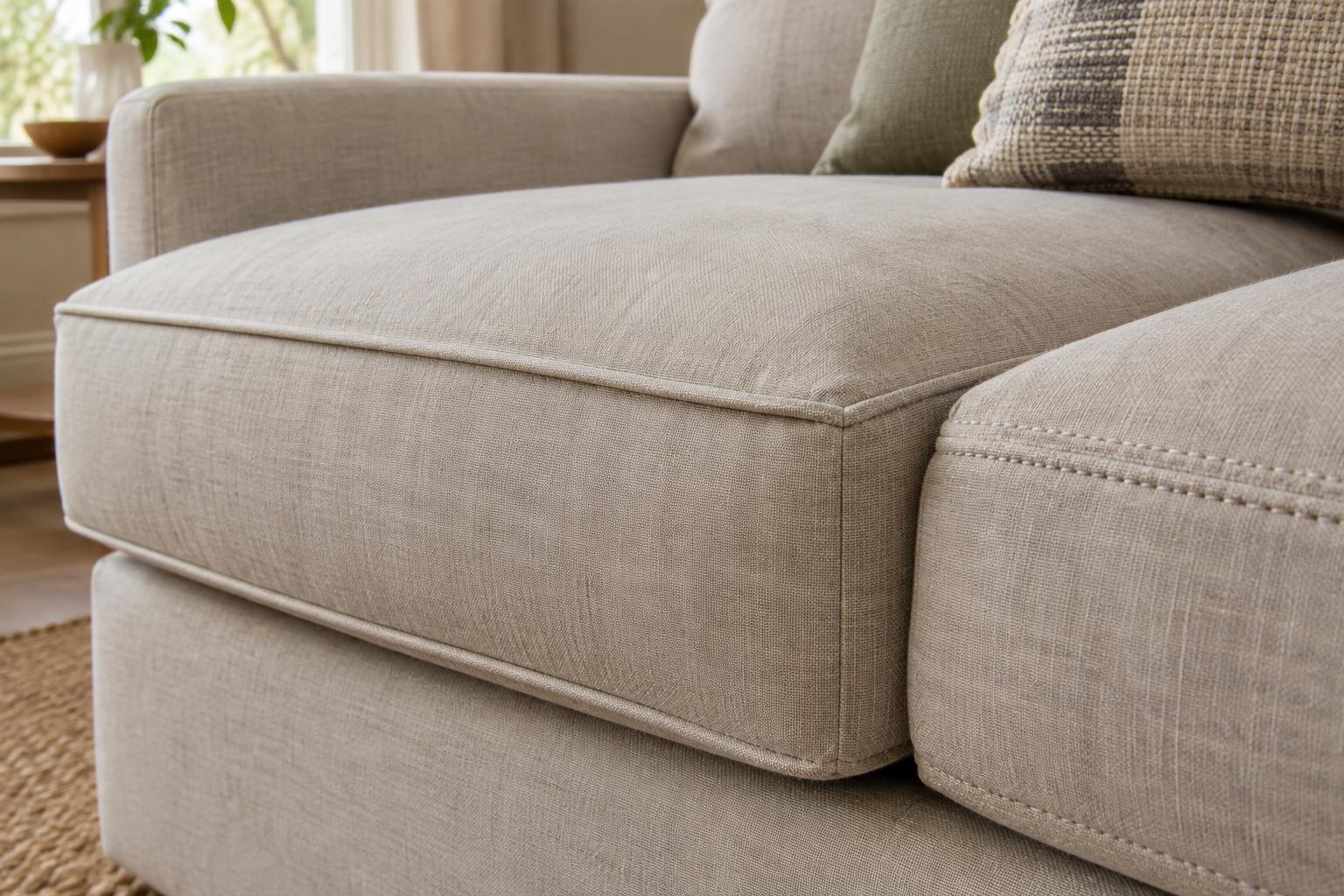
A boxed cushion has a separate strip of fabric, often called a boxing panel, running around some or all of its sides. This gives the cushion a defined thickness and creates a seam where the strip meets the top and bottom panels. Boxed edges are common on seat cushions because they can produce a relatively structured outline. Their appearance still depends on the insert: a soft or undersized insert may leave the sides looking loose.
A knife-edge cushion joins its front and back panels directly, without a separate side strip. The edge tends to look thinner and softer, making this construction a familiar choice for some back cushions and decorative pillows. A rounded or bullnose front takes another approach: fabric curves over the front of the cushion rather than meeting a boxing panel at a front seam. This can make the seat’s leading edge look smoother, although the exact effect depends on the fabric and cushion shape.
When comparing these styles, look at the cushion from the front and the side. A prominent front seam can emphasize a straight, tailored line; a continuous curve can make the same seat appear less angular. Also check how the cushion meets its neighbors. Gaps, uneven heights or twisting corners may be more noticeable than the seam style itself.
What piping and topstitching change
Piping, sometimes called welt, is a narrow fabric-covered cord sewn into a seam. It outlines an edge and can make the cushion’s shape easier to read, particularly when the upholstery is plain. Matching piping gives a subtle border, while contrasting piping draws more attention to every corner and curve. Because it sits proud of the surface, piping may show scuffs or trapped debris sooner than a flat seam in a heavily used spot.
Topstitching is a visible line of stitching made near a seam or fold. It can hold a seam allowance in place and add a tailored detail without the raised profile of piping. Stitch spacing and straightness matter visually, especially on a long front edge. On a patterned fabric, either piping or topstitching can compete with the print, so it helps to view a full cushion rather than judging a small fabric sample alone.
These details should look deliberate rather than forced into shape. Check whether piping follows the corners smoothly, whether paired cushions have similar seam positions and whether visible stitches are reasonably even. Small variations are normal on soft furnishings, but a seam that pulls sharply or rolls out of position may deserve a closer inspection.
Check construction before replacing a cover
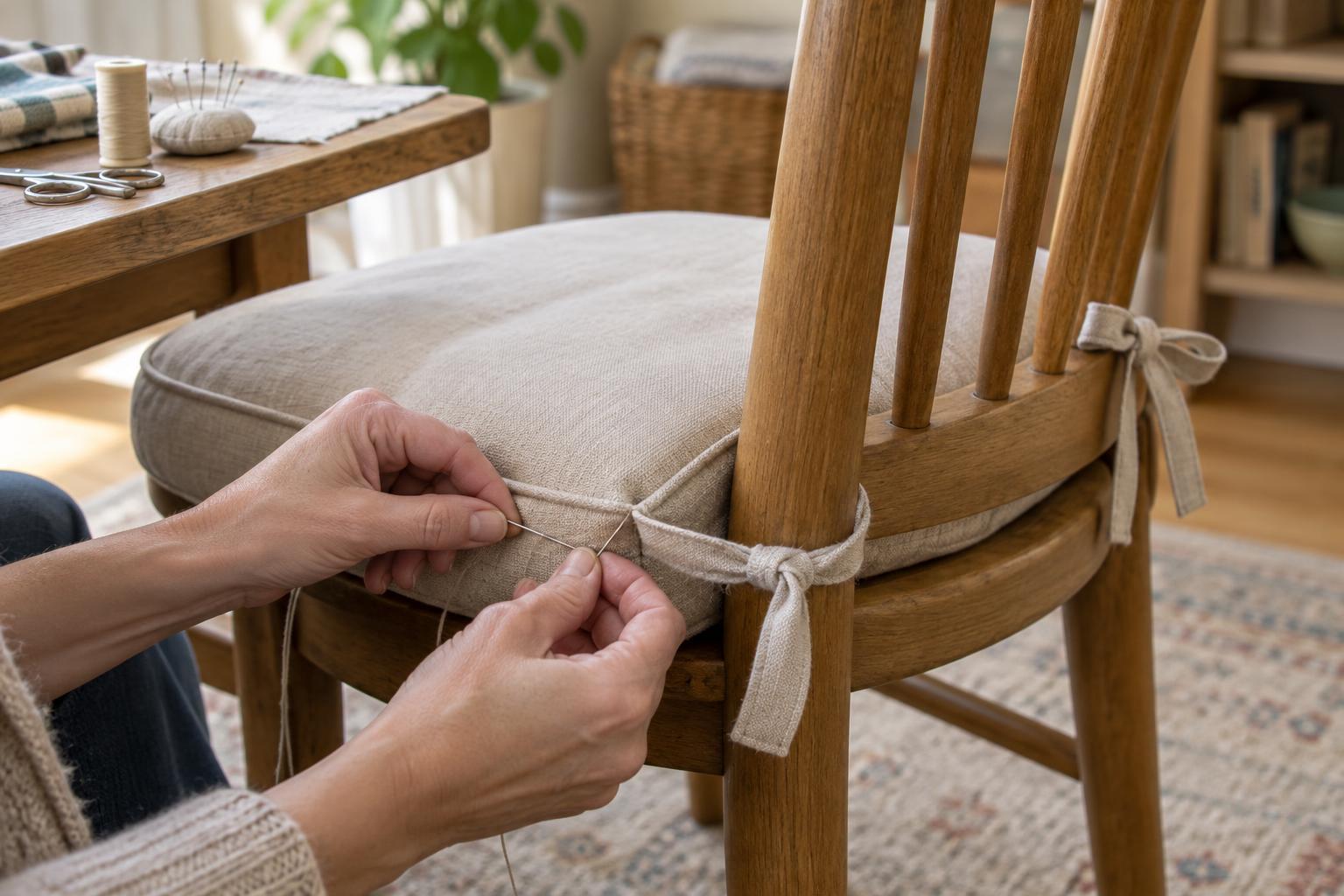
If you are ordering or making a replacement cushion cover, record more than its overall width and depth. Note whether it has a boxing panel, where the seams sit, which edges have piping and how the back opening closes. Measure the existing cushion and cover separately if possible: a stretched old cover does not necessarily show the size the new one should be. Photograph the front, sides and back before removing anything.
Look for a zipper or other closure and check that it opens far enough to remove the insert without excessive pulling. If the cushion uses a directional fabric or a large pattern, note which way the design runs on the top and side panels. Matching a prominent pattern across a seam may require extra planning; it is not guaranteed by choosing the same fabric.
Finally, separate cosmetic concerns from fit problems. A loose corner might come from a worn insert, a stretched cover or both. A crooked edge could reflect how the cushion was placed rather than how it was sewn. Taking a few minutes to inspect these possibilities can help you preserve a detail you like—or choose a simpler one that better suits how you use the sofa.